
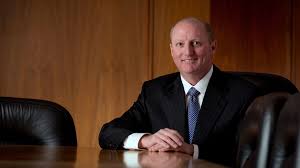
Greg Abel took over as CEO of Berkshire Hathaway [NYSE: BRK.B] on January 1, 2026, inheriting a record cash pile and a $320 billion equity portfolio from Warren Buffett, and is now facing the defining question of his early tenure: where to deploy it.
Berkshire ended the first quarter of 2026 with approximately $397 billion in cash, cash equivalents, and short-term US Treasury investments, a record level that Abel himself has signalled will be deployed patiently and only when the right opportunity at the right price presents itself.
Abel continued the net-selling trend he inherited from Buffett in Q1, though he did break a 13-quarter streak of net equity disposals by buying back $234 million of Berkshire’s own stock and completing the $9.7 billion acquisition of OxyChem from Occidental Petroleum during the quarter.
With the cash mountain sitting idle, analysts and market observers have been scanning the sub-$30 end of the market for the kind of brand-heavy, cash-generative franchises that fit Berkshire’s established investment template, and five names have emerged as the most compelling fits.
Kraft Heinz [NASDAQ: KHC], already a Berkshire holding, trades at approximately $23.96, pays a 6.76% dividend yield, and carries a forward earnings multiple of around 12 times, with Q1 adjusted EPS of $0.58 beating the $0.50 consensus for the fourth consecutive quarter and free cash flow jumping 58.9% to $766 million under CEO Steve Cahillane’s $600 million reinvestment plan.
Pfizer [NYSE: PFE], not currently in Berkshire’s portfolio but fitting the Buffett-style screen Abel may inherit, trades at approximately $25.68 with a 6.6% dividend yield and a forward price-to-earnings ratio of just 9, with the non-COVID portfolio growing 9% operationally in Q4 and Q4 adjusted EPS of $0.66 beating the $0.57 consensus, though a $1.5 billion loss-of-exclusivity headwind and uncertainty around Most-Favoured-Nation drug pricing present meaningful risks.
Nu Holdings [NYSE: NU], Latin America’s largest digital bank and a former Berkshire holding, trades near $13.80 at a trailing price-to-earnings ratio of 23, with full-year revenue growing 42% to $15.77 billion, net income climbing 45.6% to $2.87 billion, and a Q4 return on equity of 33%, though Brazilian macroeconomic exposure and $4.2 billion in expected credit losses represent the primary risks.
Abel has stated publicly that while there are great companies in the market he would like to own, the “price relative to the opportunity” does not currently justify major acquisitions at scale, a posture consistent with the broader Buffett philosophy of waiting for genuine value rather than deploying capital for its own sake.
Berkshire’s Q1 2026 operating earnings rose 18% year-over-year to $11.34 billion, with insurance underwriting up 28%, providing the cash generation engine that continues to fund the growing reserve Abel is patiently waiting to put to work.
Wall Street consensus on Berkshire itself remains constructive, with a 12-month average price target of approximately $536.67, implying around 9% upside, while analysts broadly characterise Abel’s early moves as a disciplined continuation of the Berkshire philosophy rather than a departure from it.
