
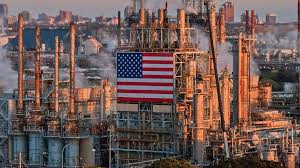
The Trump Administration is exploring unconventional methods to refill the United States Strategic Petroleum Reserve after emergency releases tied to the Iran war and the Strait of Hormuz crisis drove stockpiles significantly lower, including the possibility of drilling for oil beneath US military bases and other federal sites.
The Strategic Petroleum Reserve stood at 392 million barrels as of May 1, following the release of 172 million barrels as part of a coordinated 400-million-barrel global emergency drawdown managed through the International Energy Agency. The current level remains well above the low point of 347 million barrels recorded in June 2023 during the Biden administration, but it is still close to the lowest reserves held since the 1980s.
US Energy Secretary Chris Wright has hinted publicly in recent weeks that drilling at military installations could become part of the government’s strategy to rebuild stocks. Speaking at a Wall Street Journal event, he pointed to the example of military sites located within oil-producing regions where no extraction is currently taking place.
“We have military bases or facilities that are in the middle of oil fields, but there is no development under those resources, that’s crazy. It’s right there,” Wright said. “We will see some creative things,” he added, indicating that the administration is looking for pragmatic approaches to federal energy resources.
Oil drilling at military bases has precedent in the US. The Barksdale Air Force Base east of Bossier City in Louisiana has permitted drilling on its grounds for decades. In September 2025, the Bureau of Land Management sold two parcels totalling 1,922 acres within the Barksdale base for energy development purposes.
The administration has structured the current SPR release as an exchange arrangement, requiring companies to return the borrowed crude with interest, planning to replace 172 million barrels drawn down with approximately 200 million barrels within the next year. However, officials are also pursuing outright ownership of crude by tapping publicly held land, which would avoid the need to purchase oil from private companies at elevated prices.
Those elevated prices continue to squeeze American drivers. The national average price for a gallon of regular gasoline rose to $4.55 after consecutive weekly jumps of 25 cents, reaching a level not seen since 2022. The American Automobile Association noted that pump prices are now $1.40 higher than a year ago, and still rising despite crude oil prices dipping below $100 per barrel amid ongoing negotiations over the Strait of Hormuz.
Officials have acknowledged that any production from military base drilling would not relieve energy market pressure in the short term, given the time required to bring new wells into production. The administration is nonetheless pressing ahead with exploring all available federal land options as part of what Wright described as a broader push to take pragmatic and creative approaches to energy security.
