
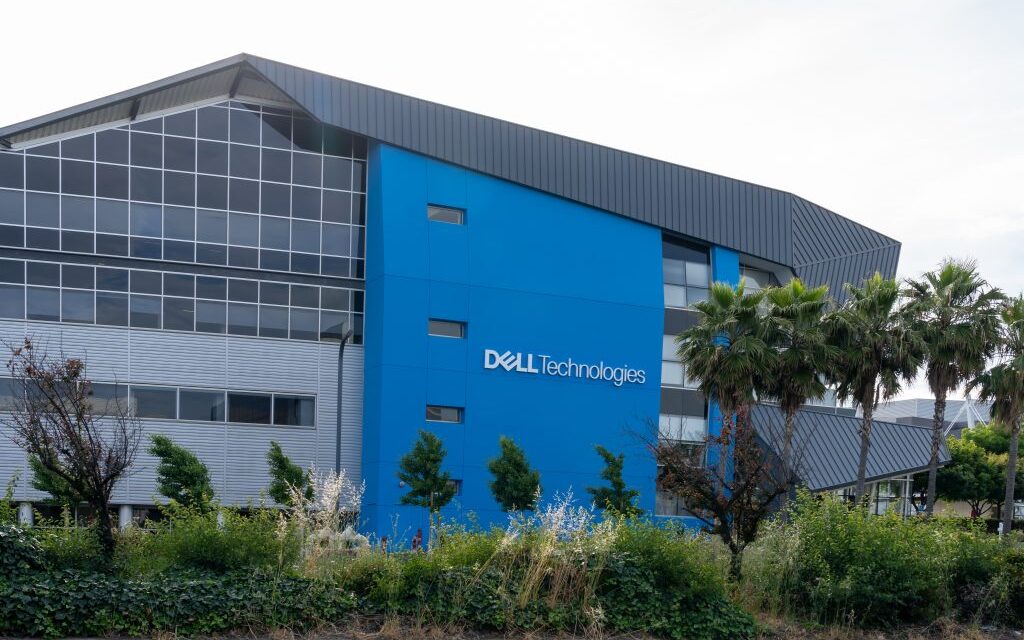
Shares of Dell Technologies (NYSE: DELL) surged 12.6 percent on Friday, hitting an intraday high of $263.82, as investors piled back into the stock on the back of a major supercomputer contract win and renewed scrutiny surrounding one of its key rivals in the AI server market.
The primary catalyst for Friday’s move was a deal announced by TotalEnergies earlier in the week. The French energy giant confirmed it is investing more than 100 million euros to build Pangea 5, a next generation supercomputer developed in partnership with Dell and Nvidia (NASDAQ: NVDA) for its research hub in Pau, France. The project will boost TotalEnergies’ computing capacity sixfold. Dell EMEA president Adrian McDonald said the system is designed to “accelerate discovery, increase efficiency and drive the energy transition forward.”
Dell is also expanding its AI hardware lineup in collaboration with AMD (NASDAQ: AMD). Starting in July 2026, its PowerEdge XE7745 and R7725 servers will gain support for AMD Instinct MI350P PCIe GPUs, enabling enterprises to run generative and agentic AI workloads on existing data centre infrastructure without requiring a full redesign.
The scale of Dell’s AI server business underscores why investors responded so positively to fresh developments. The company reported earlier this year that it accumulated more than $64 billion in AI-optimised server orders for fiscal 2026, shipped $25 billion of that figure, and entered fiscal 2027 with a backlog of $43 billion. Chief Operating Officer Jeff Clarke described the moment as transformational, with Dell guiding for around $50 billion in AI-optimised server revenue during the current fiscal year.
Renewed focus on Super Micro Computer (NASDAQ: SMCI) also contributed to Dell’s rally. Reports emerged citing Bangkok-based OBON Corp as a suspected conduit for moving Super Micro servers carrying Nvidia chips into China. In March, U.S. authorities charged Super Micro co-founder Yih-Shyan Liaw and two others with routing servers through Taiwan and Southeast Asia to circumvent export controls. Super Micro was not named as a defendant and said it had cooperated with authorities, but the legal cloud has generated uncertainty that analysts say could drive customers to alternative suppliers. Analysts at Melius Research flagged Dell as a likely beneficiary given its scale and relationship with Nvidia, while Gabelli Funds noted concerns that customers may seek to avoid any proximity to regulatory scrutiny.
Despite those pressures, Super Micro itself projected stronger-than-expected revenue for the current quarter. The company’s CFO said that component allocations from suppliers including Nvidia, AMD, and Intel remain unchanged.
Dell will report its fiscal 2027 first-quarter results on May 28, with attention focused on whether its AI backlog is converting into revenue and profit at a pace that justifies the current valuation.
