
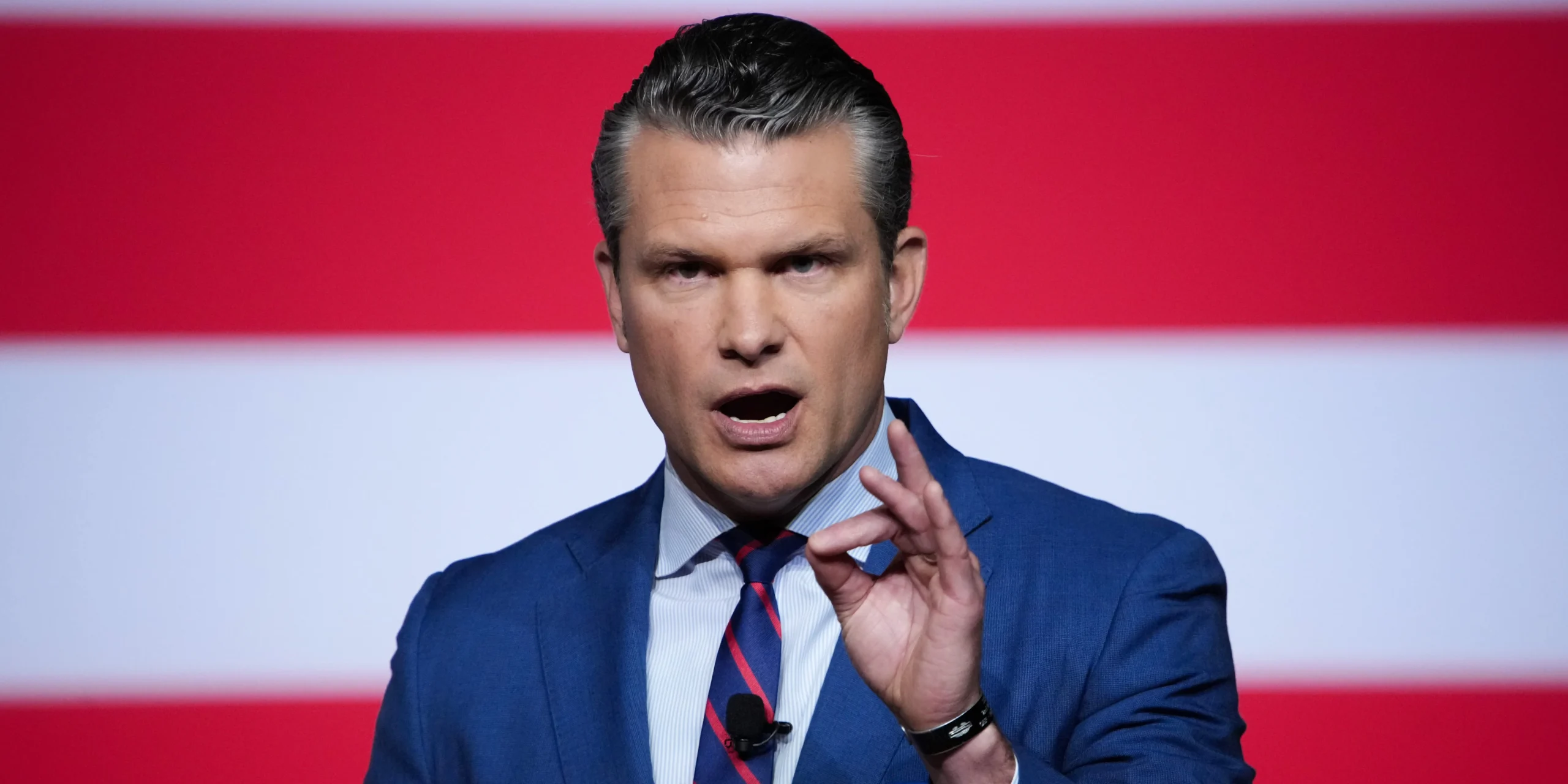
A Washington Post-ABC News-Ipsos poll published on May 6, 2026 has found that Americans are deeply uncomfortable with religion-related statements made by President Donald Trump and Defence Secretary Pete Hegseth, delivering what the pollsters described as a striking rebuke in a closely divided country.
The findings land at a politically sensitive moment, with midterm elections six months away and the Republican Party navigating a deteriorating approval environment driven largely by the ongoing US-Iran war and rising domestic prices.
The poll captures the fallout from an extraordinary public feud between Trump and Pope Leo XIV, the first American to lead the Catholic Church. The conflict erupted when Pope Leo said he hoped the president would find an “off-ramp” to the US-Israeli war with Iran and called the president’s rhetoric about the Iranian people “truly unacceptable.” Trump responded on social media, calling Leo “WEAK on Crime, and terrible for Foreign Policy,” and later posted an AI-generated image depicting himself in biblical robes, which he subsequently deleted and claimed had been misinterpreted.
Hegseth had urged Americans to pray for “overwhelming violence” against enemies, even as Pope Leo used his Easter Mass to call on “those who have weapons” to “lay them down.” The contrast in tone between the two prominent American figures on questions of faith, war, and morality appears to have registered strongly with the public, including among voters who supported Trump in 2024.
A separate NBC News poll gave Pope Leo a net favourability rating of plus 34, compared to Trump’s net favourability of minus 12. That survey found 41 percent of Americans view Trump favourably against 53 percent who view him unfavourably, while 42 percent view Pope Leo positively and only 8 percent view him negatively.
YouGov polling added further texture to the divide. Forty-eight percent of Americans said they agree more with Pope Leo on the question of the Iran war, while 28 percent sided with Trump and Vance. Among independents, a crucial voting bloc heading into the midterms, 50 percent sided with the pope while only 15 percent sided with the administration.
Pew Research data captured a longer-term erosion in Catholic support for the president. Trump’s approval among white Catholics fell from 59 percent in February 2025 to 52 percent by January 2026, a slide that predated the Leo confrontation and suggests a broader drift that the papal feud may now be accelerating.
The wider Washington Post-ABC News-Ipsos poll, conducted April 24 to 28 among 2,560 US adults, also found Trump’s overall job approval standing at 37 percent with disapproval at 62 percent, the highest of his two terms in office. Americans disapprove of his handling of the Iran situation by 66 percent to 33 percent, while his rating on the economy has declined seven points to 34 percent as gas prices spike. His approval on inflation has fallen five points to 27 percent, and his lowest mark comes on the cost of living generally, where just 23 percent approve.
None of five senior administration officials tested in the poll registered a net positive approval rating. Hegseth sits at minus 17 points, while RFK Jr. and FBI Director Kash Patel each register minus 19 points. Vice President JD Vance, who converted to Catholicism in adulthood and told the pope to be “careful” when talking about theology, sits at minus 13 points. Jerome Powell, the Federal Reserve chair Trump has repeatedly attacked, came out best of all those tested with a net positive rating of plus 7.
Among Catholic conservatives themselves, the response to the papal feud has been notably fractured. While some prominent evangelical commentators backed Trump’s policy criticisms of Leo, many were appalled by the biblical imagery post. Prominent Trump-supporting Christian Broadcasting Network commentator David Brody urged the president to take the image down, writing that it “crosses the line.” Archbishop Paul Coakley, head of the US Conference of Catholic Bishops, offered direct criticism of the president, as did Bishop Robert Barron, who had been applauding Trump as an Easter guest at the White House just days earlier.
Political scientists have cautioned against overstating the immediate electoral implications. University of Notre Dame professor Darren Davis described the Trump-Leo disagreement as “relatively minor” among the range of issues historically driving midterm outcomes, and noted that with six months until election day, voters are unlikely to weight the episode heavily in November. However, the consistent erosion of Catholic support documented across multiple polls, combined with the striking comfort-level numbers in the latest Washington Post survey, suggests the administration’s rhetorical approach to religion is generating costs that extend well beyond the base it was designed to energise.
