
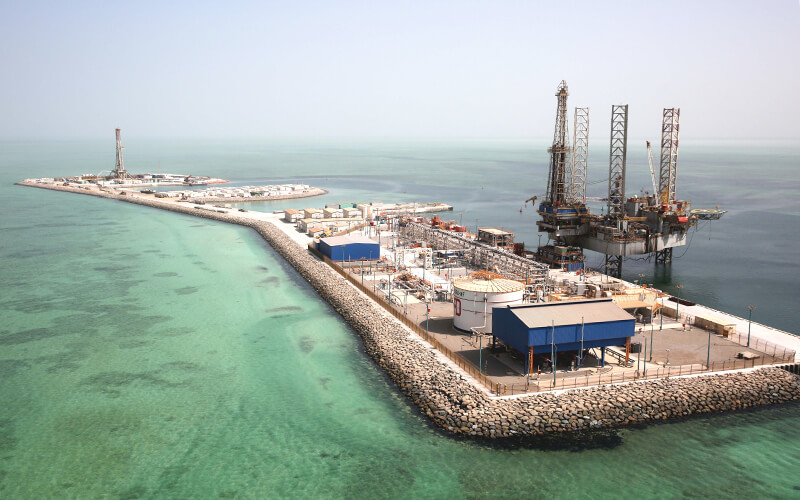
Nine weeks into the closure of the Strait of Hormuz, the UAE port of Fujairah has cemented its position as one of the most strategically consequential energy facilities on the planet. What was already a significant oil export and bunkering hub has become indispensable, offering one of the very few routes through which Gulf crude and refined fuels can reach global markets without passing through the blocked chokepoint.
WTI crude is currently trading at $89.83 per barrel, down more than 12% on the session as peace deal optimism briefly lifted sentiment, while Brent Crude has dropped to $98.33 following Trump’s pause on the Hormuz escort operation.
Fujairah’s geographic advantage is straightforward but decisive. Positioned on the UAE’s east coast with direct access to the Indian Ocean, it sits entirely outside the Strait of Hormuz, meaning tankers loading there can depart without entering the contested waterway at all. That makes it the only meaningful oil export valve the UAE possesses in a period when Iranian control over the strait has effectively shut down conventional Gulf shipping for all but a handful of vessels.
The infrastructure underpinning Fujairah’s role is the Abu Dhabi Crude Oil Pipeline, known as ADCOP, which runs from onshore oilfields at Habshan directly to Fujairah’s terminal. The line has a nameplate capacity of 1.5 million barrels per day, with the International Energy Agency reporting that current throughput capacity runs close to 1.8 million barrels per day.
Under normal conditions the UAE routes approximately 1.1 million barrels per day of domestic crude through this pipeline, leaving a theoretical buffer of up to 700,000 barrels per day of additional capacity that can be activated during periods of Hormuz disruption.
Even at full utilisation, Fujairah cannot come close to compensating for the total volumes lost to the crisis. The Middle East collectively exported far more than 1.8 million barrels per day through Hormuz before the conflict began, meaning most of that supply remains stranded regardless of what Fujairah can handle. For Asia, however, and particularly for India, Fujairah represents a lifeline, delivering volumes that would otherwise be impossible to source from regional producers. The port is also home to a refinery partly owned by Vitol, the world’s largest independent oil trader, with approximately 100,000 barrels per day of refining capacity adjacent to a large storage terminal jointly held by Vitol, FM Global Infrastructure Fund and Abu Dhabi’s national energy company.
Beyond crude exports, Fujairah is the Middle East’s most important bunkering port, ranking alongside Singapore, Rotterdam and China’s Zhoushan as one of the world’s largest ship-refuelling hubs. For vessels attempting to navigate alternative routes to Asia and Africa while avoiding Hormuz, Fujairah provides an essential refuelling stop that would otherwise require significant detours to find equivalent capacity.
That strategic centrality has made Fujairah a direct target. Iranian attacks on the port began in the second week of the conflict, suspending loading and bunkering operations on multiple occasions through March before the early-April ceasefire offered temporary relief.
When the United States launched Project Freedom earlier this week, the escort operation designed to guide stranded vessels out of Hormuz, fresh attacks struck the Fujairah Petroleum Industries Zone, triggering a fire and an immediate surge in oil prices. The incident was followed swiftly by Trump’s decision to pause Project Freedom entirely.
The threat picture has since escalated further. Iran’s Islamic Revolutionary Guard Corps unveiled on Monday a new map of expanded territorial claims over the waters surrounding the strait. The area outlined in that map extends south of Fujairah itself, a signal that Iran views the port as falling within its zone of influence and leverage rather than neutral territory beyond the conflict.
As diplomatic efforts involving Pakistani and Chinese mediators continue without a firm resolution, Fujairah’s moment in the spotlight shows no sign of ending. The port has become the clearest physical illustration of what a protracted Hormuz closure means for global energy logistics, and any sustained peace deal will be measured at least partly by how quickly normal tanker flows through the strait can resume and relieve the pressure on this small UAE city that currently carries an outsized share of the world’s oil supply burden.
