
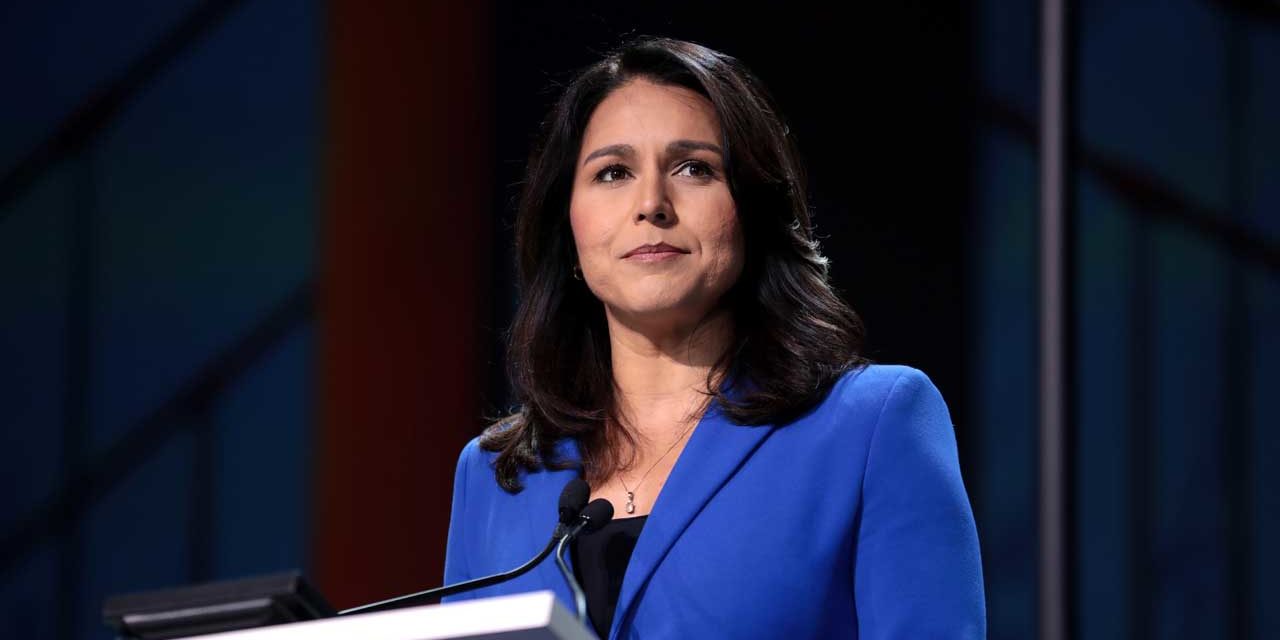
The question of whether Tulsi Gabbard will be the next senior official to leave the Trump administration has been persistently unresolved for weeks, with a pattern of denial and reassurance from the White House sitting alongside reporting of genuine internal deliberation that makes the situation more complicated than either the “totally secure” framing of official statements or the “about to be fired” framing of social media speculation accurately conveys.
The specific trigger for the most recent escalation was the firing of Pam Bondi as Attorney General on April 2, which CBS News reported prompted Trump to privately consider whether Bondi could be moved into the DNI role currently held by Gabbard, before sources told the outlet the president ultimately wants Gabbard to remain. That internal polling and consideration alone is a meaningful signal about how Gabbard’s position is viewed within the administration even when the public messaging is one of confidence.
Karoline Leavitt initially said she had not heard the president express any intention to remove Gabbard from her role, then subsequently said on Fox News that Trump has “full confidence” in his intelligence director, a progression from uncertainty to reassurance that itself attracted attention as not being the cleanest possible denial from a position of genuine security.
The bipartisan scrutiny that has attached itself to Gabbard’s tenure adds substantive policy concerns to what might otherwise be purely political speculation. Her appearance during an FBI search of a Fulton County, Georgia elections office drew questioning from Senate Intelligence Committee members on both sides of the aisle, as did reports from Reuters and Nextgov that her office seized voting machines in Puerto Rico and that she has become increasingly involved in election security and integrity efforts that some analysts argue fall outside the DNI’s traditional mandate
At the Senate Armed Services Committee testimony on April 30, during which she addressed war powers and Iran-related intelligence matters, Gabbard maintained the composure and institutional loyalty that has characterised her public conduct throughout a tenure that her supporters describe as a genuine transformation of an intelligence community that had become politicised in the previous administration.
Megyn Kelly offered a perspective that captures the political calculus surrounding Gabbard’s position with unusual clarity: “To lose Joe Kent and then to lose Tulsi Gabbard too? It’s like the restrainer wing of the Republican Party, which is already unhappy with Trump, if he fires Tulsi, that’s not going to help the poll numbers. He doesn’t need to give the neocons another gift.”
Kent was the counterterrorism chief who resigned after condemning the attack on Iran, making him the most visible casualty of the administration’s internal war over foreign policy philosophy, and the concern Kelly articulates is that removing Gabbard would complete the removal of the two most prominent voices for restraint from the administration’s national security team, leaving it entirely populated by figures comfortable with the interventionist direction the Iran conflict represents.
Trump himself gave what multiple commentators described as a notably tepid reassurance when asked about Gabbard’s job security, saying: “She’s a little bit different in her thought process than me, but that doesn’t make somebody not available to serve,” a formulation that is technically a vote of confidence but that carries none of the warmth or specificity of the endorsements he extends to officials he is genuinely committed to.
The pattern of the Trump second-term cabinet thus far, where women have departed in higher proportions and more dramatically than their male counterparts, has given the Gabbard speculation a demographic dimension that Democratic lawmakers including Sarah McBride and Alexandria Ocasio-Cortez have made explicit, arguing that the president is showing he will fire women while retaining men whose conduct has been more publicly questioned.
Whether Gabbard survives through the summer depends on whether the internal dynamic around her role has genuinely stabilised since the Bondi firing triggered the most acute phase of the speculation, or whether the next significant intelligence failure or policy disagreement reopens the conversation in a context where the White House’s initial reluctance to act decisively becomes harder to sustain.
