
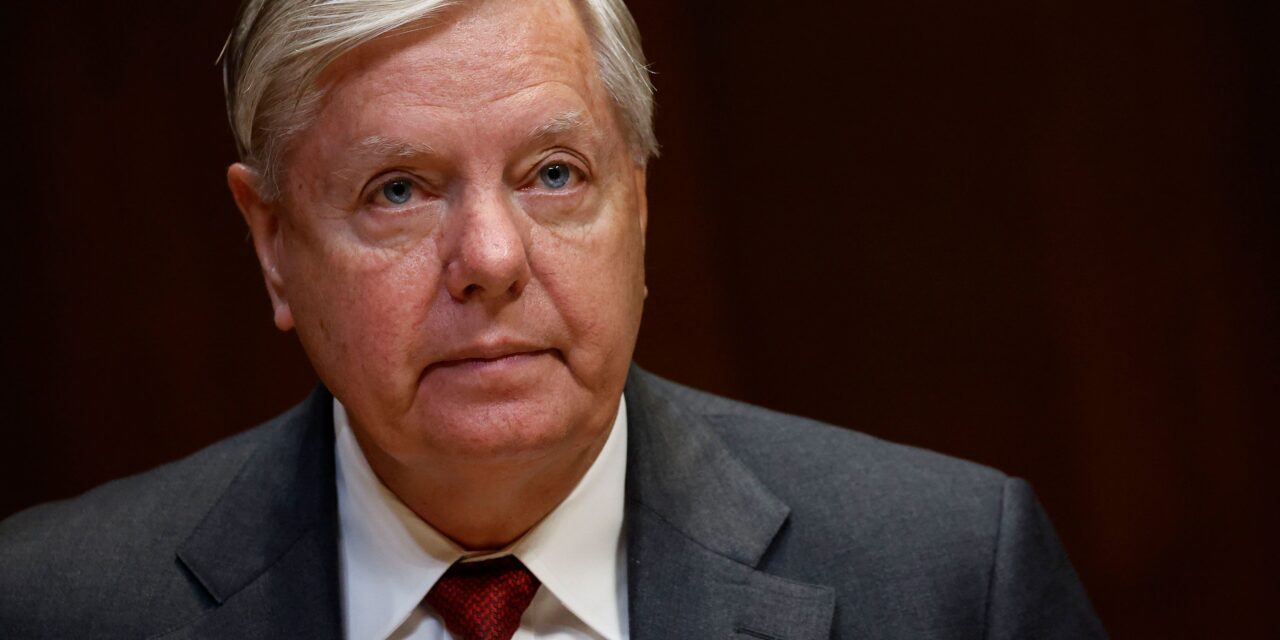
Republican Senator Lindsey Graham of South Carolina appeared on Fox News’s Hannity programme this week in what critics described as an undignified public fundraising appeal, telling viewers directly that he had been out-raised twice in consecutive quarters by Democratic opponents and pleading for small-dollar donations to help him survive what is shaping up as the most expensive and competitive midterm Senate environment in recent memory.
“They’re killing us money-wise,” Graham told Hannity, before directing viewers to his campaign website and adding: “I’d rather have $10 from a million people than one guy give me $10 million,” a formulation designed to frame small-dollar grassroots giving as both morally superior and strategically necessary for a party facing a Democratic fundraising machine that House Majority PAC has confirmed is operating at double the pace of the equivalent period in 2024.
The Independent’s coverage of Graham’s appeal noted that the senator was simultaneously attacking the Democratic party establishment while acknowledging the practical reality that money is flowing away from Republicans at exactly the moment when the party most needs it to defend seats it expected to hold comfortably, given the economic headwinds created by the US-Iran war and elevated gas prices that have depressed Trump’s approval ratings.
Graham’s predicament reflects a broader pattern that the Democratic fundraising apparatus has been exploiting throughout the spring, with House Majority PAC announcing this week that it raised $69 million in the first quarter of 2026, described by PAC president Mike Smith as “our strongest fundraising start to an election year ever” and nearly double the $37 million raised at the equivalent point in the 2024 cycle.
The political environment Graham and his Senate Republican colleagues are navigating is significantly more hostile than the one they expected when the year began: Trump’s approval rating on the economy has fallen to 30 percent according to an AP-NORC poll published in late April, 60 percent of respondents in CNBC’s All-America Economic Survey disapprove of Trump’s economic handling, and gas prices hovering around $4 per gallon are generating exactly the kind of kitchen-table economic pain that congressional Democrats plan to campaign on through November.
Graham’s appearance also raised legal questions from social media commentators, with several observers noting that soliciting campaign donations during a partisan cable news programme may implicate FCC equal time rules, which have been used to require broadcasters to provide equal airtime to opposing candidates, though no formal regulatory challenge has been filed as a result of the segment.
The Republican incumbent Senate class facing re-election in November includes several members in states that Trump carried in 2024 but where the combination of the Iran war, elevated prices, and the Medicaid cut provisions of the One Big Beautiful Bill Act have created unexpected electoral vulnerability, making Graham’s public admission of fundraising weakness a useful data point for the Democratic Party’s campaign targeting operation.
Graham told Hannity that “if the Republican Party is wrong with God, no amount of money will help us,” a line that drew mockery from the Crooks and Liars commentary site, which framed the senator’s dual invocation of prayer and financial need as a particular form of political messaging that reveals the gap between the Republican Party’s self-image and its current standing with voters outside its base.
The practical question behind all of the commentary is whether Graham faces a genuine re-election threat or is engaging in the traditional political tactic of performatively overstating vulnerability to motivate donors who give more generously when they believe a seat is at risk rather than safe, a calculation that congressional incumbents of both parties make routinely regardless of their actual electoral standing.
