
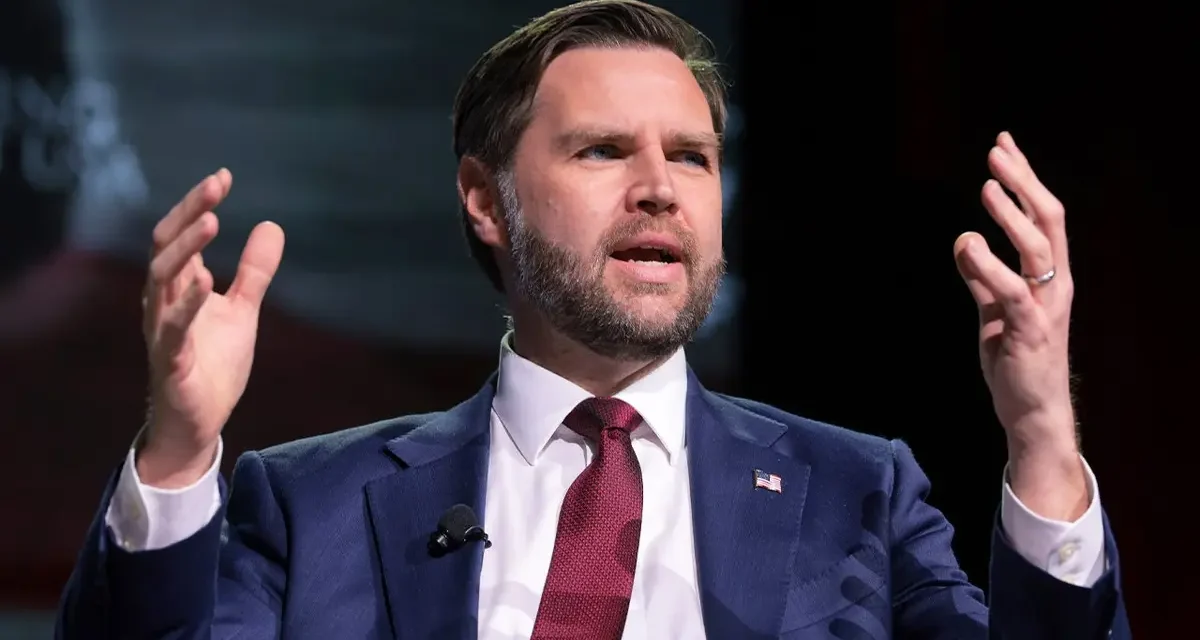
Vice President JD Vance is departing for Islamabad on Tuesday to lead the US delegation at a second round of peace talks with Iran, arriving with the two-week ceasefire set to expire and President Trump having extended the deadline by approximately one day to “Wednesday evening Washington time” — while simultaneously warning that a failure to reach a deal would trigger a new bombing campaign targeting Iranian bridges and power plants.
The mission has already generated its own layer of White House communications chaos. Trump told The New York Post on Monday morning that Vance was already on his way to Pakistan, saying “They’re heading over now.” Vance’s motorcade was subsequently spotted at the White House, and sources familiar with his schedule confirmed to CNN that he was in fact scheduled to depart on Tuesday, not Monday.
The same pattern had played out a day earlier, when Trump told ABC News’ Jonathan Karl that Vance would not attend the talks due to Secret Service concerns about the 24-hour security preparation window, only for a senior US official to tell Karl shortly afterward that Vance would in fact be leading the delegation. “It’s only because of security,” Trump had said. “JD’s great.”
Vance will be joined in Islamabad by special envoy Steve Witkoff and Trump’s son-in-law Jared Kushner, the same team that attempted the first round of talks. Those earlier negotiations produced no agreement after the Iranian delegation declined to engage substantively with US terms, a dynamic the White House attributed to pressure from the Islamic Revolutionary Guard Corps on Iran’s negotiating team to hold a harder line.
As of Monday night, there were mixed signals from Tehran on whether Iran would even send a delegation to the second round. Iran’s Foreign Ministry had publicly insisted earlier in the day that no negotiations were taking place, while simultaneously Iran’s seizure of US vessels was escalating — Iranian state media demanding the “immediate release” of the cargo ship Touska, seized by the USS Spruance over the weekend, and its crew. Tehran also warned that “any miscalculation” by Washington would trigger “final chastisement,” language that reflected the IRGC’s continued resistance to a diplomatic resolution that would require Iran to end uranium enrichment and withdraw support from regional proxy groups.
Trump has projected public confidence that Iran will ultimately come to the table, pointing to the country’s diminished military capacity following eight weeks of US-Israeli strikes. “The war with Iran is now in the rearview mirror for the market,” one Wall Street strategist told CNBC on Monday — reflecting the financial sector’s current disposition — though the diplomatic picture remains genuinely uncertain.
A ceasefire extension is possible if Islamabad talks show momentum, but Trump has been explicit that an extension is “highly unlikely” without demonstrable progress, and his own account of the timing and personnel involved has been inconsistent enough that senior administration officials have become the more reliable source of information about what the US government is actually doing.
