
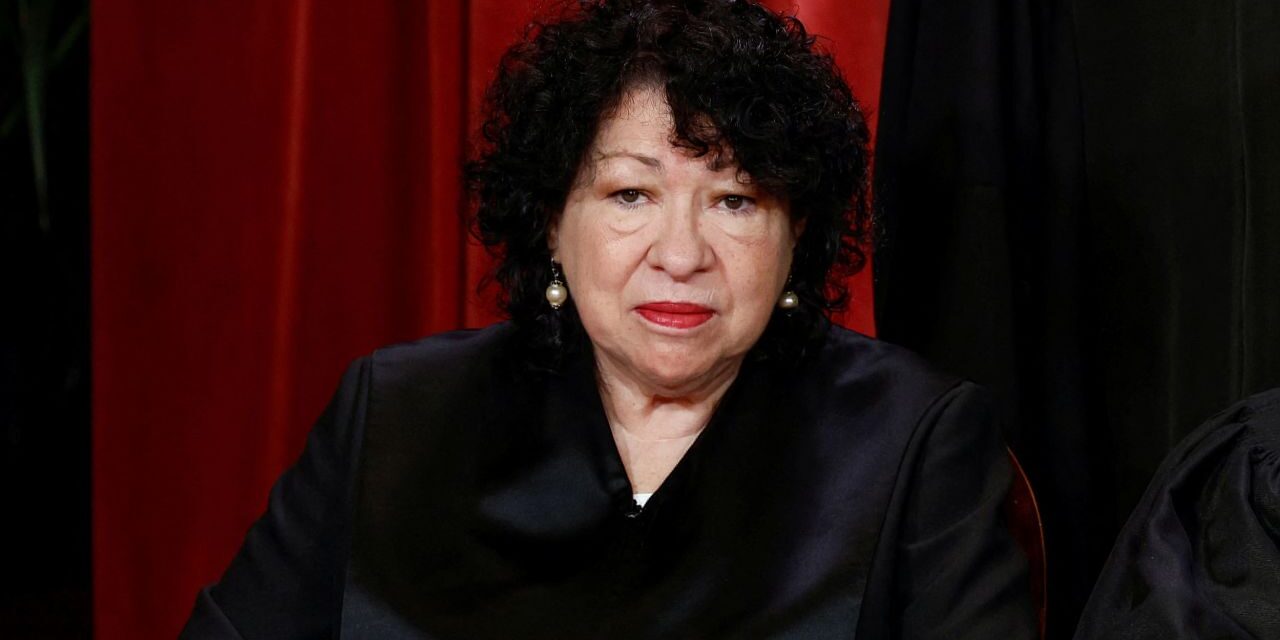
Supreme Court Justice Sonia Sotomayor has issued a highly unusual public apology to her colleague Brett Kavanaugh after making pointed personal remarks about him during a law school appearance, in an episode that has lifted the curtain on tensions within a court that routinely presents an image of collegial stability to the outside world.
The remarks that prompted the apology were delivered by Sotomayor on April 7 during an appearance at the University of Kansas School of Law, where she was discussing the court’s decision last September to lift restrictions on the Trump administration’s immigration enforcement sweeps across the Los Angeles area.
Without naming Kavanaugh directly but in a context that left little doubt about who she was referring to, Sotomayor criticised the author of a concurring opinion that sought to reassure readers that the immigration stops in question were brief and that anyone found to have legal status would be promptly released.
“I had a colleague in that case who wrote, you know, these are only temporary stops,” Sotomayor said, according to Bloomberg Law. “This is from a man whose parents were professionals. And probably doesn’t really know any person who works by the hour.”
The comment drew significant attention, with progressive advocacy groups using it to amplify existing criticism of Kavanaugh’s concurrence, which they had labelled “Kavanaugh stops” and argued effectively greenlighted racial profiling by immigration officers against workers in certain professions and locations.
In her formal apology statement, Sotomayor acknowledged the remarks had crossed a line that she herself had set as the standard for judicial conduct. “At a recent appearance at the University of Kansas School of Law, I referred to a disagreement with one of my colleagues in a prior case, but I made remarks that were inappropriate. I regret my hurtful comments. I have apologized to my colleague,” the statement read.
Kavanaugh has not publicly responded to the original comment or the subsequent apology, a posture consistent with the court’s general preference for handling interpersonal friction internally rather than through public exchanges that could further politicise the institution.
The episode comes against the backdrop of Sotomayor’s busy schedule of public appearances between the court’s March and April argument sessions, during which she has spoken at multiple law schools and made the case for judicial engagement and civic education while acknowledging the degree to which the court is operating in an environment of unprecedented political scrutiny.
Speaking at the University of Alabama shortly after the Kansas appearance, she struck a more conciliatory tone, insisting that most of the justices “actually like each other” and share common human values even where they diverge sharply on legal interpretation, a message that reads differently in the wake of the apology than it might have done in isolation.
