
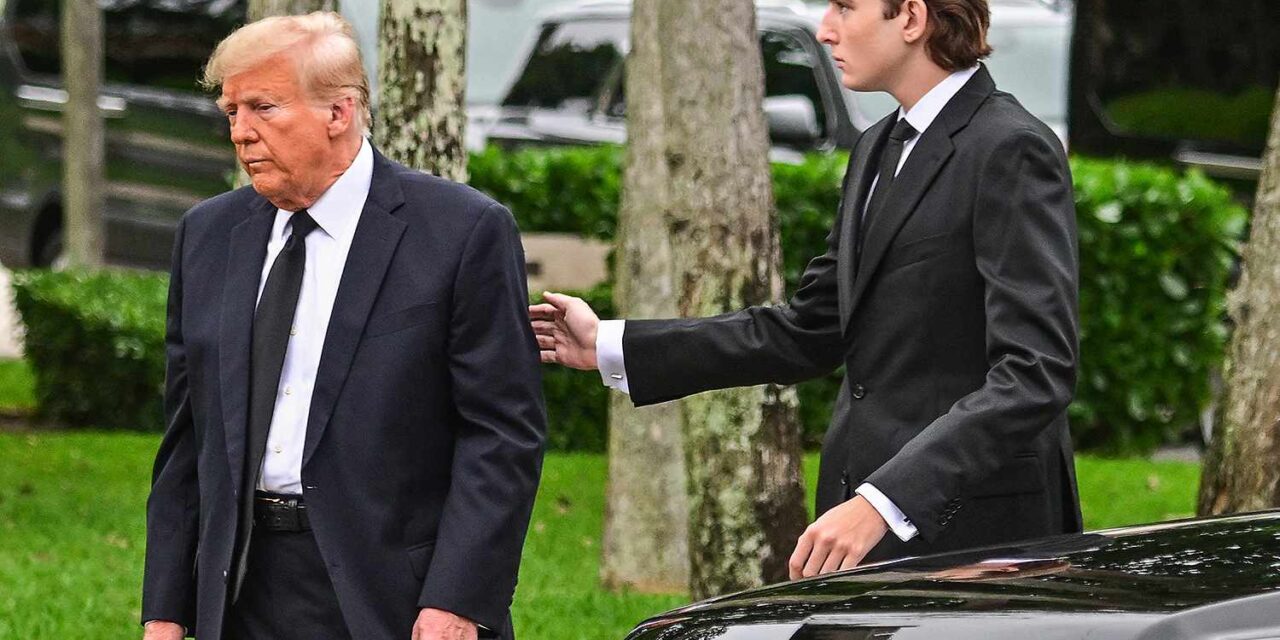
Barron Trump, the president’s youngest son and a current student at NYU’s Stern School of Business, has become the subject of renewed public debate over mandatory military service after the Pentagon confirmed that automatic registration for the Selective Service draft pool will begin on December 1 for all eligible men aged 18 to 26, following a provision included in the 2025 National Defense Authorization Act.
The policy, which will also apply to green-card holders, refugees, asylum seekers and undocumented young men, has generated significant commentary on social media directed specifically at the 20-year-old, with critics pointing to his father’s well-documented avoidance of military service in the 1960s due to a bone spurs diagnosis.
“Trump faked his bone spurs so he could avoid the draft, yet now he expects others to be drafted. Barron better be the first name listed!” one post read. Another asked: “Will Barron be granted an exemption (or develop bone spurs)?” Others were blunter: “The GOP should send their children first.”
The president has acknowledged the human cost of his war with Iran, expressing grief for fallen servicemembers while warning “there will likely be more before it ends,” a framing that critics argue sits uneasily with the spectacle of his youngest son pursuing a business degree while the conflict continues.
Melania Trump spoke about Barron during a Fox Business interview prior to the latest draft controversy, describing him as an adult who understands politics and gives his father advice. “He’s an incredible young man; we are very proud of him. Second year in Stern School of Business, and he loves it,” she said.
The First Lady is said to be closely involved in Barron’s social arrangements, and reports suggest she kept three of Trump’s older children — Don Jr., Ivanka and Eric — off the guest list for Barron’s recent birthday celebration, citing a lack of closeness between the siblings who share different mothers.
The automatic registration policy does not activate a draft, which would require separate congressional authorisation that has not been sought, but it represents the most significant administrative expansion of Selective Service infrastructure since the early 1970s and has brought renewed public attention to who bears the burden of wartime service.
