
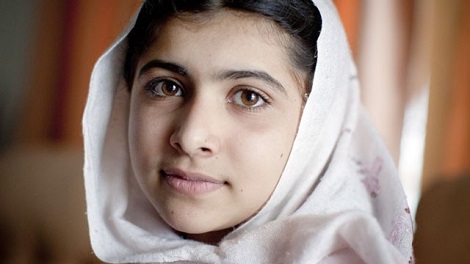
The parties involved shirk any form of responsibility for the tragedy, but the nagging guilt lies buried in the statements that their good-natured consciences refuse to accept. Kakkar at length expressed that it could have been avoided if everyone stuck to the pseudonym, but Ziauddin wanted to submit Malala for the International Children’s Peace Award[24] which she only placed runner-up.[25] However, in the same interview, Kakkar said he feared the “eventuality” of her assassination. He was not alone. Ellick claims that he tried to talk Ziauddin out of the documentary, but the child’s father remained insistent.[26] This runs counter to Human Rights Watch advocate Bene Sheppard’s statement that no one could have foreseen the impending tragedy, though these statements only serve to distance those who lauded Malala, encouraging her from the safety of stable countries from the moral culpability of their complicity in her assassination attempt.[27] Perhaps the most complicit unwitting conspirator was her own father who at every opportunity to protect his daughter, Ziauddin only raised her above his head to be better seen.
Ameer Ahmed Khan, the head of BBC Urdu takes his stance a little more openly. In his interview with Time magazine, he thinks: “If I was to sit here at my desk today and think, oh my God, if we hadn’t found her, this would never have happened, that would actually mean that I am not taking into account the contribution that children like Malala make to a cause that we so strongly believe in.”[28]
It is beautiful and almost idyllic to believe such a sentiment, but it is intentionally misleading. BBC did not just find Malala, they manufactured her in the fashion that the studio system of classical Hollywood stamped out the sultry starlets of its Golden Age—with fabricated public relations and on screen personae. This can be observed in Khan’s statement that he was thrilled with the “way she was writing.” He claimed it was “very, very fresh, untainted, and straight-from-the-heart take one what was going on.”[29] The statement compliments Kakkar’s notion that prior reporting in Pakistan had become stale and what he offered was new and different. Mirza Waheed explains of the process, “Malala passed on hand-written diary pages to our reporter [Kakkar] and he would scan and e-mail or fax them to me. I would edit it to retain its directness, its raw texture, and at times, as I edited her, I would well up.”[30] This all seems legitimate until Kakkar’s interview with the International Herald Tribune where he explains that he would simply call Malala for thirty minutes every day and have her narrate what she “saw, felt, or heard that day.”[31] It becomes clear that the writing so raw that it enamored the world was not written by an eleven year old school girl, but by a professional journalist, then edited by Waheed, and published by Khan.[32] All the while, Malala’s father took the steadfast role as public relations manager, soliciting documentary makers and international accolades to keep his special daughter relevant in the international community, and offer him the soap box for his political lunge.
Whether the motive was profit-driven or to draw attention to the region is irrelevant. The individuals involved encouraged her as though she were merely an actress in a film; as though shouts of cut could stop villains from firing blank rounds. And now their accolades roll like an epilogue before the final credits. Kakkar currently resides in Prague, where he works for a radio station in relative safety.[33] Waheed is now able to live as full time novelist.[34] Khan still enjoys the BBC Urdu department head, but now with more laurels and relevance.[35] Adam Ellick, who filmed the experience, received the New York Times Publishers Award and The Daniel Pearl Award while contending as a finalist for the prestigious Livingston Award for journalistic excellence.[36] Ziauddin finally received the soapbox he desired with his new five-year diplomatic posting as education attaché in Birmingham, England.[37] However, Malala was blessed with the greatest gift – that of life. With life came a lesson of symbols, and the dangerous perception they can hold. She has since rejected an award from President Obama and requested that the school once named in her honor be rescinded. She does not want other girls to be targeted.[38] She does not want her name used to make them into symbols.
When the world should have viewed her as a child, they made her a symbol. Rather than caution her on diplomacy, the world encouraged her brazen outcries. Rather than protect her, the world exalted her. And when she thought the world was with her, the world made her a martyr. Now, as she recovers from nearly fatal gunshot wound that ripped through the throat that pushed so many strong words and cracked the skull that housed the mind she treasured above all her possessions, the world explains away their moral culpability and their complicity in the machine that nearly killed Malala Yousefzai.
References
[1] Crossette, Barbara. “Taliban Explains Buddha Demolition.” New York Times, 19 March 2001. http://www.nytimes.com/2001/03/19/world/19TALI.html.
[2] Zaeef, Abdul Salam, My Life with the Taliban (New York: Columbia University Press, 2010), Kindle e-book file, ch. 13.
[3] Edwards, David B. “Mad Mullahs and Englishmen: Discourse in the Colonial Encounter.” Comparative Studies in Society and History 31 no. 4 (1989): 650.
[4] Edwards “Mad Mullahs and Englishmen.” 653.
[5] Ibid. 652
[6] Kalsoom. “Swat Girls School Close in Response to Taliban Ban.” Changing Up Pakistan, 16 Jan. 2009, http://changinguppakistan.wordpress.com/2009/01/16/swat-girls-schools-close-in-response-to-taliban-ban/.
[7] Coll, Steve. Ghost Wars: The Secret History of the CIA, Afghanistan, and Bin Laden, from the Soviet Invasion to September 10, 2001 (London: Penguin Books, 2005), Kindle edition, ch. 30.
[8] Peer, Basharat, “The Girl Who Wanted to Go to School.” The New Yorker, 10 Oct. 2012, http://www.newyorker.com/online/blogs/newsdesk/2012/10/the-girl-who-wanted-to-go-to-school.html
[9] Ali, Mansoor. “Where It All Started: A Diary That Highlighted Swat’s Human Tragedy.” The Express Tribune, 12 October 2012, http://www.newyorker.com/online/blogs/newsdesk/2012/10/the-girl-who-wanted-to-go-to-school.html
[10] Ellick, Adam. “My ‘Small Video Star’ Fights for Her Life.” The Lede(blog), 9 Oct. 2012. Web. 18 Mar. 2013, http://thelede.blogs.nytimes.com/2012/10/09/my-small-video-star-fights-for-her-life/.
[11] Ali, Mansoor. “Where It All Started: A Diary That Highlighted Swat’s Human Tragedy.” The Express Tribune, 12 October 2012, http://tribune.com.pk/story/450515/where-it-all-started-a-diary-that-highlighted-swats-human-tragedy/
[12] Yousafzai, Malala. “Swat: Diary of a Pakistani School Girl.” Let Us Build Pakistan (blog). 14 Oct. 2012, http://criticalppp.com/archives/771
[13] Wilkinson, Islambard. “Militants Refuse to Down Arms Despite Sharia Deal.”The Telegraph, 3 May 2009, http://www.telegraph.co.uk/news/worldnews/asia/pakistan/5267799/Militants-refuse-to-down-arms-despite-Sharia-deal.html
[14] Ellick, Adam. “Class Dismissed.” New York Times video, 2010, http://www.nytimes.com/video/2009/02/22/world/asia/1194838044017/class-dismissed-in-swat-valley.html
[15] Ibid.
[16] Ibid.
[17] Ibid.
[18] “About Children’s Peace Prize,” Children’s Peace Prize, accessed March 17, 2013, http://childrenspeaceprize.org/background/
[19] Westhead, Rick. “Brave Defiance in Pakistan’s Swat Valley,” The Toronto Star, October 26, 2009, http://www.thestar.com/news/world/2009/10/26/brave_defiance_in_pakistans_swat_valley.html
[20] “Young Pakistani Journalist Inspires Fellow Journalists.” Institute for War and Peace Reporting, 15 Jan. 2010, http://iwpr.net/report-news/young-pakistani-journalist-inspires-fellow-students.
[21] Peer, Basharat, “The Girl Who Wanted to Go to School.” Ibid.
[22] “Malala in the House, Plans to Launch Political Party.” Editorial. Dawn, 4 Jan. 2012, http://dawn.com/2012/01/04/school-named-after-malala/
[23] Cooke, Sonia Van Gilder. “Pakistani Heroine: How Malala Yousefzai Emerged from Anonymity.” Time, October 23, 2012, http://world.time.com/2012/10/23/pakistani-heroine-how-malala-yousafzai-emerged-from-anonymity/
[24] Ali, “Where It All Started,” Ibid.
[25] “Children’s Peace Prize Nominee Malala Yousafzai Shot,” Children’s Peace Prize,October 9, 2012, http://childrenspeaceprize.org/
[26] Ellick, “My Small Video Star,” Ibid.
[27] Cooke, “Pakistani Heroine,” Ibid.
[28] Ibid.
[29] Ibid
[30] Peer, “The Girl Who Wanted to Go to School,” Ibid.
[31] Ali, “Where It All Started,” Ibid.
[32] Ibid.
[33] Ibid.
[34] Peer, “Where It All Started,” Ibid.
[35] Cooke, “Pakistani Heroine,” Ibid.
[36] Ellick, Adam. “Resume.” Adambellick.com, accessed March 17, 2013, http://www.adambellick.com/resume.htm.
[37] Meikle, James. “Malala Yousafzai’s Father Appointed to Diplomatic Job at UK Consulate.” The Guardian, January 3, 2013, http://www.guardian.co.uk/world/2013/jan/03/malala-yousafzai-father-given-diplomatic-role-uk.
[38] Yusufzai, Rahimullah. “Malala’s Family Refuses U.S. Award.” The News International, March 11, 2013, http://www.thenews.com.pk/Todays-News-13-21511-Malalas-family-refuses-US-award.
