Do Financial Markets Still Exist?
As central banks have learned that they can rig financial asset prices to the delight of everyone in the market, in what sense does capitalism, free markets, and price discovery exist?
Read MoreDr. Paul Craig Roberts attended four of the finest universities, studied under two Nobel Prize-winners in economics, authored 20 peer-reviewed articles in journals of scholarship, and published four academic press peer-reviewed books, including Harvard and Oxford Universities, and seven commercially published books. His most recent book is The Neoconservative Threat to World Order: Washington's Perilous War for Hegemony.

Dave Kranzler is a University of Chicago MBA and is an active participant in financial markets.
Michael Hudson is a Distinguished Research Professor of Economics at the University of Missouri, Kansas City (UMKC), and Professor of Economics at Peking University in China. He gives speeches, lectures and presentations all over the world for official and unofficial groups reflecting diverse academic, economic and political constituencies. Before moving into research and consulting, Prof. Hudson spent several years applying flow-of-funds and balance-of-payments statistics to forecast interest rates, capital and real estate markets for Chase Manhattan Bank and The Hudson Institute (no relation). His academic focus has been on financial history and, since 1980, on writing a history of debt, land tenure and related economic institutions from the Sumerian period, antiquity, and feudal Europe to the present. Since 1996 as president of the Institute for the Study of Long Term Economic Trends (ISLET), he has written reports and given presentations on balance of payments, financial bubbles, land policy and financial reforms for U.S. and international clients and governments. He organized the International Scholars Conference on Ancient Near Eastern Economies (ISCANEE) in 1993, and to-date has co-edited the preceedings of six academic conferences on the evolution of property, credit, labor and accounting since the Bronze Age. His website and blog can be found at michael-hudson.com.
Posted by Paul Craig Roberts | Feb 14, 2018 | News & Analysis, Economy, US |
As central banks have learned that they can rig financial asset prices to the delight of everyone in the market, in what sense does capitalism, free markets, and price discovery exist?
Read MorePosted by Paul Craig Roberts | Jun 3, 2017 | News & Analysis, Economy, US |
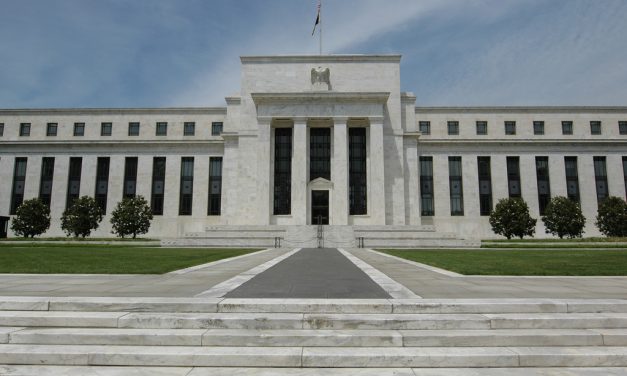
The Federal Reserve adds to the wealth of the rich as its monetary inflation flows into the prices of financial assets, like stocks and bonds.
Read MorePosted by Paul Craig Roberts | Aug 26, 2015 | Economy, News & Analysis, US |
The central bank’s ability to create money to support stock prices negates the price discovery function of the stock market.
Read MorePosted by Paul Craig Roberts | Jul 28, 2015 | Economy, News & Analysis, US |
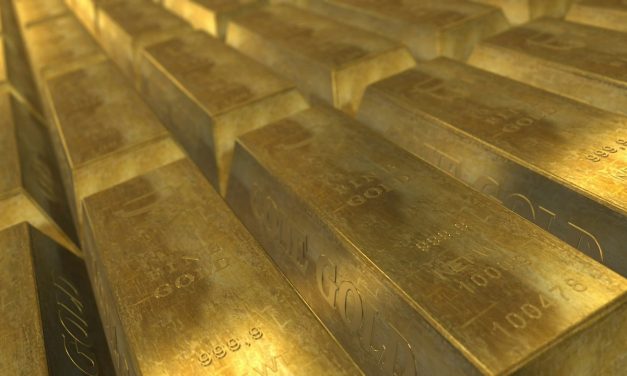
The gold market is being manipulated. Why?
Read MorePosted by Paul Craig Roberts | Nov 7, 2014 | Economy, News & Analysis, US |
The price of bullion is not determined in a real market, but in a rigged paper market in which there is no limit to the ability to print paper gold.
Read MorePosted by Paul Craig Roberts | Sep 24, 2014 | Economy, US |
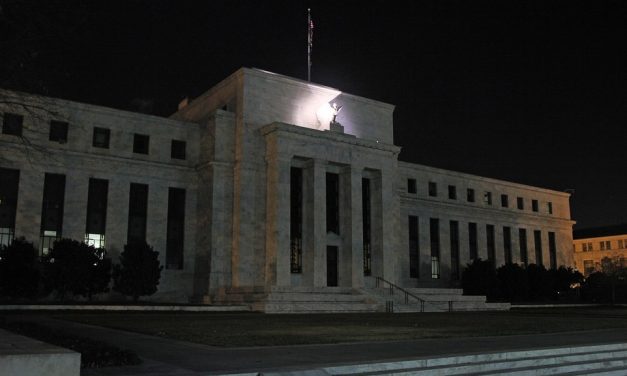
The Fed and its agents rig the gold price in the New York Comex futures (paper gold) market.
Read MorePosted by Paul Craig Roberts | Sep 9, 2014 | Economy, US |
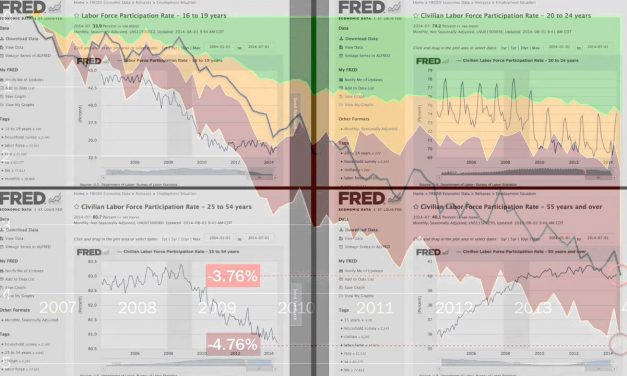
The clear hard fact is that the US economy is being run for the sole benefit of a few rich people.
Read MorePosted by Paul Craig Roberts | Aug 12, 2014 | Economy, US, Viewpoints |
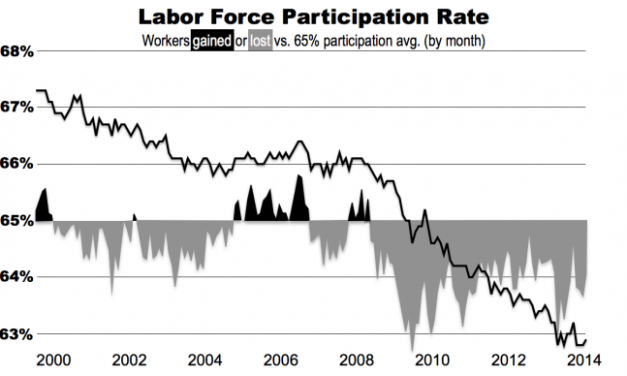
Clearly there is no economic recovery when participation in the labor force collapses.
Read MorePosted by Paul Craig Roberts | Jul 18, 2014 | Economy, News & Analysis, US |
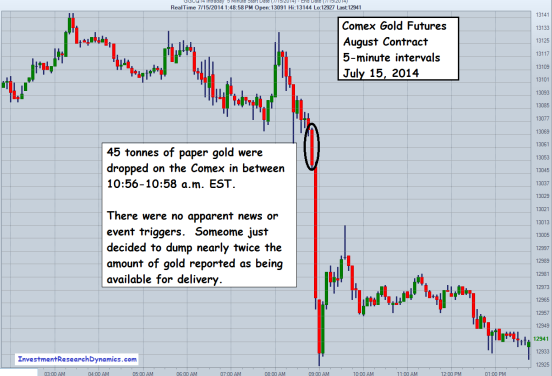
One motive of the manipulation is to operate and control Comex trading in a manner that helps the Fed contain the price of gold.
Read MorePosted by Paul Craig Roberts | Jul 9, 2014 | Economy, News & Analysis, US |
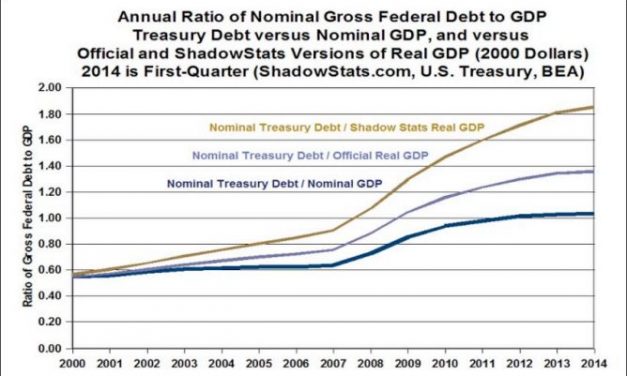
The US economic outlook is deteriorating as years of understatement of inflation has resulted in years of overstatement of GDP growth.
Read More