
A growing bloc of Senate Republicans is signalling that President Trump’s freedom to prosecute the Iran war without congressional authorisation is approaching its constitutional limit, with Senators Susan Collins and Thom Tillis among those publicly warning that the administration will need to come before Congress as the conflict approaches the 60-day threshold set out in the War Powers Resolution of 1973.
The deadline, which falls on April 29, requires the president to either secure an authorisation for use of military force or begin withdrawing troops within 30 days, a legal constraint the White House has not yet formally acknowledged in public communications.
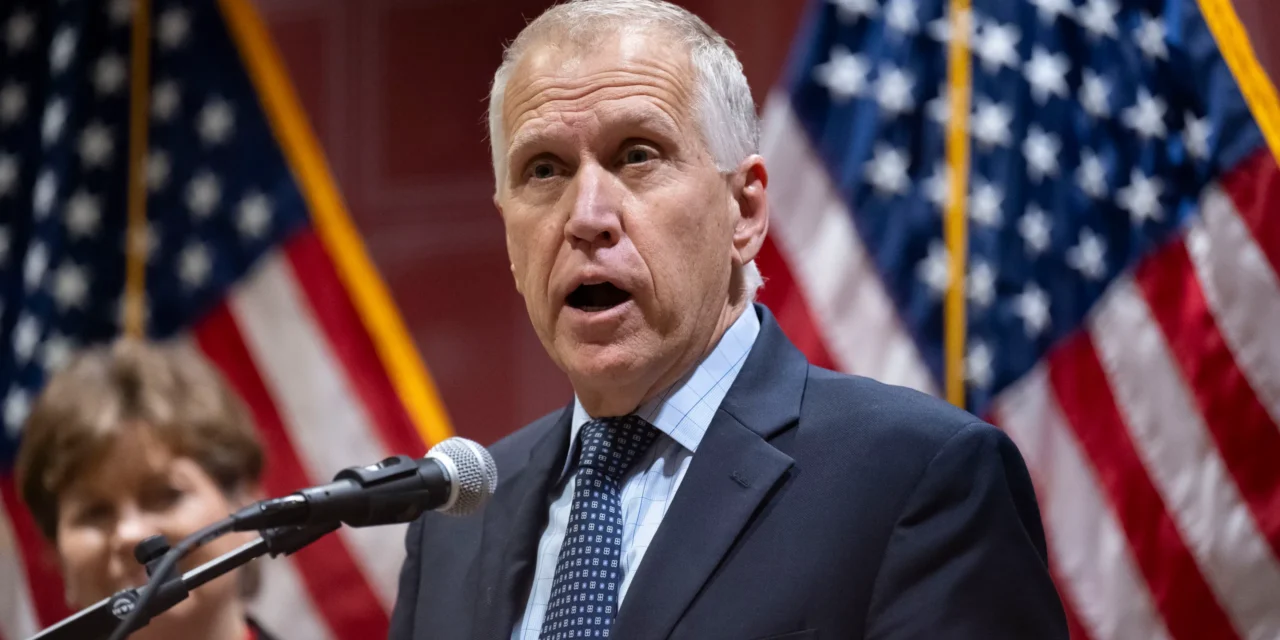
Tillis has been the most explicit of the Republican dissenters, telling reporters that the situation requires a clear answer from the administration. “I think after 60 days, the way the War Powers Resolution reads is you either are articulating an exit plan that would make an AUMF moot, or you’re planning to be there for an extended period of time, which means the AUMF is necessary,” he said.
Collins, who faces a competitive re-election contest in Maine, issued a statement drawing a firm line around ground troops and extended operations. “I have been clear from the beginning of this military operation that the President’s power is not unlimited as Commander in Chief, as the Constitution gives Congress an essential role in matters of war and peace. If this conflict exceeds the 60 days specified in the War Powers Act, or if the President deploys troops on the ground, I believe that Congress should have to authorize those actions,” she said.
Senator Lisa Murkowski of Alaska has reportedly been consulting colleagues on a resolution that would formally authorise the conflict beyond the deadline while placing guardrails on its scope, a vehicle that could offer the White House a path forward without triggering the kind of political rupture that a clean authorisation debate might produce.
Senator John Curtis of Utah has gone further, writing in the Deseret News that he will not support ongoing military action beyond the 60-day window without congressional approval on either constitutional or historical grounds, a position that carries additional weight as the war’s cost estimate from the Center for Strategic and International Studies approaches $30 billion.
Others within the Republican conference remain firmly in the administration’s corner. Senator Lindsey Graham has declared the War Powers Resolution unconstitutional and urged no change of course, while Senator Ron Johnson argued the US should see through the full destruction of the Iranian regime’s military capacity before entertaining any exit discussion.
The Senate voted 47-52 earlier in the week to reject the fourth Democratic resolution to halt the conflict this year, with Rand Paul the only Republican crossing the aisle on this occasion, but the closeness of the vote in the House, which failed 213-214, illustrated that the administration’s majority is thin and the dynamics are fluid.
The White House has described the deadline as a matter for the president’s legal counsel to address rather than a public negotiation, and press secretary Anna Kelly reiterated that “the President’s preference is always diplomacy, and Iran is desperate to make a deal — but they first must renounce their desire for a nuclear weapon and agree to redlines articulated by the United States.”
What changes in the final days of April is the degree to which moderate Republicans feel they have political cover to break publicly with leadership, and with polling showing 55 percent of Americans opposed to the conflict and only 32 percent in support, that calculation is shifting in ways that may not yet be fully reflected in official statements.
