
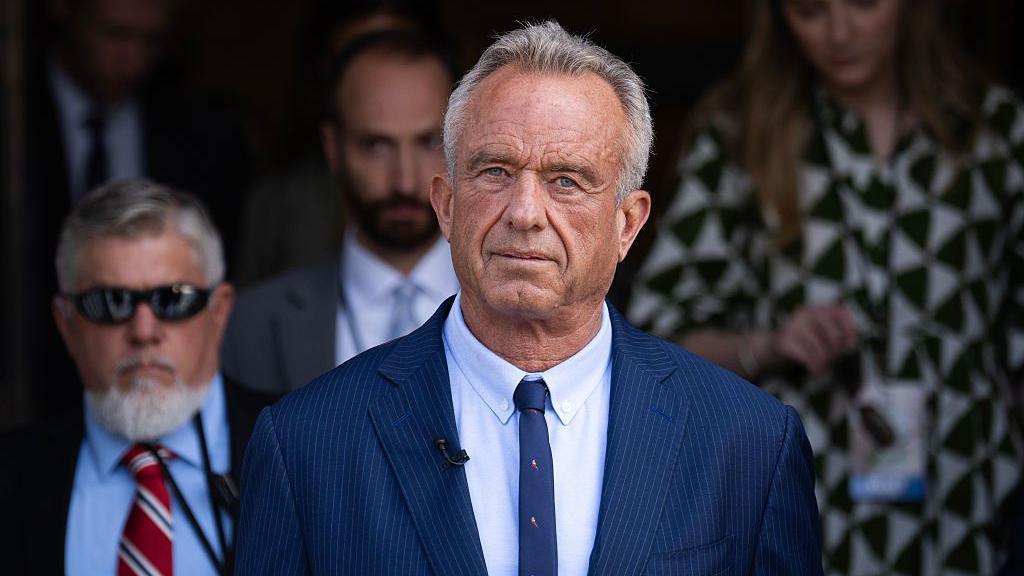
Robert F. Kennedy Jr.‘s most politically durable contribution as HHS Secretary may ultimately prove to be not the vaccine battles that have consumed headlines and courtrooms, but the systematic effort to reorient US federal food and nutrition policy toward whole foods, reduced ultra-processing and prevention-focused healthcare.
Over recent weeks, that effort has accelerated across several fronts simultaneously — from hospital trays to primary care settings to rural health infrastructure — and it is this strand of the MAHA agenda that the White House has been quietly encouraging as the most voter-friendly expression of Kennedy’s mission heading into November’s midterms.
The most visible recent move came on April 7, when the Health Resources and Services Administration announced more than $135 million in new funding to expand nutrition services and strengthen the rural health workforce, with Kennedy making the announcement during a Preventative Care Roundtable in Marana, Arizona. “Preventative care cuts costs, improves outcomes, and drives our mission to Make America Healthy Again,” Kennedy said at the event.
The funding includes $125 million directed at transforming primary care nutrition settings, targeting the management and prevention of chronic diseases including obesity, heart disease and diabetes. A further $11 million targets Rural Residency Planning and Development programmes, addressing persistent workforce shortages in high-need areas that have historically had limited access to specialist dietitian care.
The hospital food push predates the April announcement and has been building since late March, when Kennedy joined CMS Administrator Mehmet Oz at Nicklaus Children’s Hospital in Miami to highlight a model farm-to-hospital sourcing arrangement developed with the Florida Department of Agriculture. At that event, CMS issued a Quality and Safety Special Alert memo to hospitals across the country, reminding them that existing Medicare Conditions of Participation already require patient nutrition to meet individual needs under qualified dietitian oversight, and directing them to align their menus with the 2025-2030 Dietary Guidelines — the updated federal nutrition framework Kennedy and Agriculture Secretary Brooke Rollins unveiled in January.
“Quality health care starts with quality food,” Kennedy said during the Florida event. The CMS memo directs hospitals to limit ultra-processed foods, sugar-sweetened beverages, refined carbohydrates and added sugars, though experts have noted that no formal regulatory definition of ultra-processed food currently exists in the US, leaving interpretation largely to each institution.
The dietary guidelines themselves, released on January 7, represent the most substantive policy achievement Kennedy can point to so far. The 2025-2030 guidelines replaced the circular MyPlate model that had been in use since the Obama administration with an inverted pyramid that places meats, vegetables and full-fat dairy prominently at its widest point, while excluding added sugars, ultra-processed snacks and refined grains.
The framework prioritises protein, recommends cooking with olive oil, butter or beef tallow, and endorses full-fat dairy — reversing decades of federal guidance that had recommended low-fat alternatives. Kennedy was blunt about the intent behind the change. “The idea that a cheap meal made of processed food is cheap is an illusion, because you’re paying for it on the back end,” he said at the January launch. “You’re paying for it with diabetes, with obesity, with illness, and if you internalize that cost of the meal, it would be a tiny fraction of the long-term cost of eating bad food.”
The food industry response to Kennedy’s arrival at HHS has been notable. PepsiCo and J.M. Smucker both announced plans to phase out synthetic dyes and artificial ingredients from their products in the months following his confirmation, signalling that the industry calculates the regulatory direction of travel is away from artificial additives regardless of whether specific mandates follow.
The FDA has separately been phasing out petroleum-based synthetic dyes from food and medications and closing the GRAS loophole that had allowed certain untested ingredients into the food supply without notification. These are changes that carry genuine cross-partisan support in a way that Kennedy’s vaccine positioning does not, and they have produced a different kind of industry engagement — one that is more accommodating and less adversarial.
Kennedy’s broader MAHA agenda faces a structural contradiction that his critics have repeatedly highlighted. The chronic disease mission that animates his food work requires sustained investment in public health infrastructure, research and prevention programming. But the same administration that funds Kennedy’s nutrition initiatives has also cut roughly 20,000 jobs from HHS, defunded large portions of NIH chronic disease research, and slashed CDC programming for nutrition, smoking cessation and other prevention-related functions.
Former CDC official Jamila Hacker, who ran the National Center for Chronic Disease Prevention before being placed on administrative leave, said her team was never consulted on strategy despite running over 40 budget line items directly relevant to Kennedy’s stated priorities. Pew Research polling shows Kennedy at 44 percent favourable — the most popular figure in Trump’s Cabinet — but the gap between his stated ambitions and the operational capacity of the department he runs remains wide and, in the view of most independent public health researchers, widening.
