
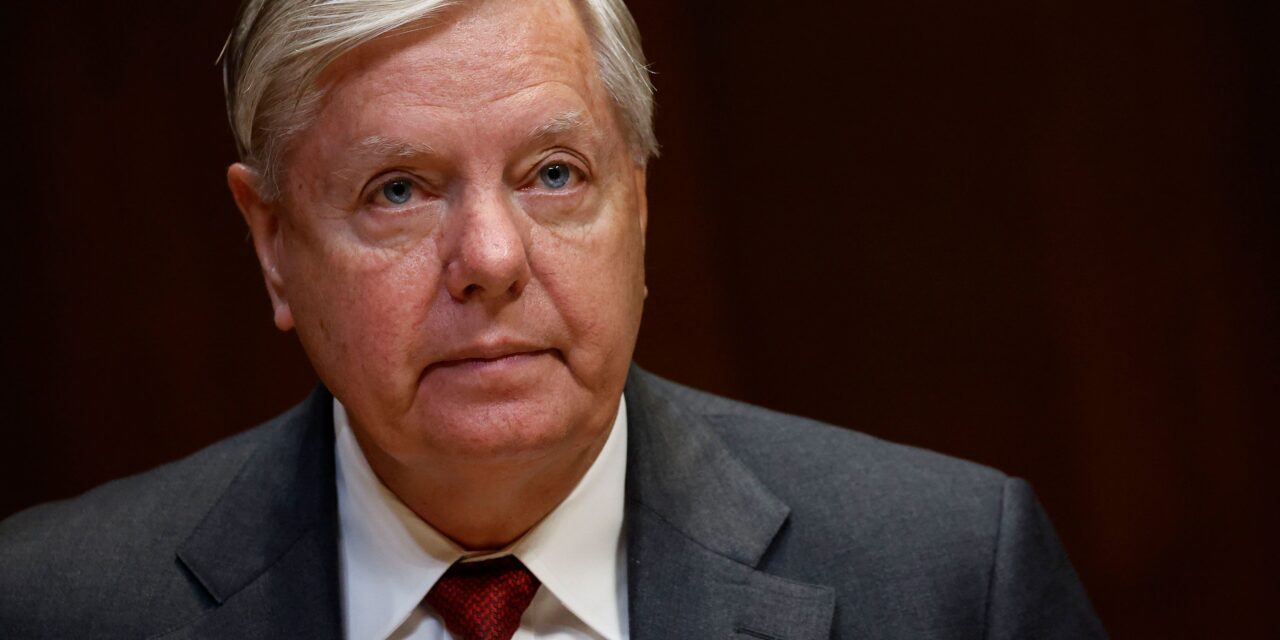
Senator Lindsey Graham of South Carolina spent months as one of the loudest voices calling for military pressure on Iran, but his reaction to the ceasefire deal has been pointed enough to create visible tension within Trump’s coalition.
Graham was among the first Republican hawks to signal caution after the agreement was announced, posting on X that “We must remember that the Strait of Hormuz was attacked by Iran after the start of the war, destroying freedom of navigation.”
He followed up the next morning with a more direct challenge to the deal’s substance. “The supposed negotiating document, in my view, has some troubling aspects, but time will tell,” Graham wrote, calling on Vice President Vance and other senior officials to brief Congress on the details.
What troubles Graham most is the uranium question, which the ceasefire leaves conspicuously unresolved, with Iran’s public version of its 10-point plan including an explicit right to enrich.
“I want to reaffirm that from my point of view, every ounce of the approximately 900 lbs. of highly enriched uranium has to be controlled by the US and removed from Iran to prevent them in the future from having a dirty bomb or returning to the enrichment business,” Graham said.
He has also invoked the precedent of the 2015 Iran nuclear deal struck under Barack Obama, calling for any permanent agreement to go through a congressional review process — a comparison that carries sharp political weight given how viciously Republicans attacked that deal at the time.
Fox News host Mark Levin amplified similar concerns, warning on Sean Hannity’s show after the ceasefire announcement that “they are the enemy” and that “they’re not going to go away if there’s not regime change.” By Wednesday morning, Levin called Iran’s 10-point proposal “an absolute disaster.”
Centrist Republican Rep. Don Bacon of Nebraska added his own note of caution on CNN, rejecting the Strait of Hormuz joint venture idea specifically. “Here’s the concern,” Bacon said. “The government’s still in place, and we should be negotiating from a position of strength, not a position that’s good for them.”
The dynamic reflects a recurring tension in Trump’s second term: the president’s instinct to close deals and declare victories often collides with the foreign policy maximalism that many of his own congressional allies have championed for years.
Whether Graham, Levin, and others can exert enough pressure to harden the final deal’s terms — or whether Trump will accept something more modest to bring the conflict to an end — is likely to define the next two weeks of negotiations.
