
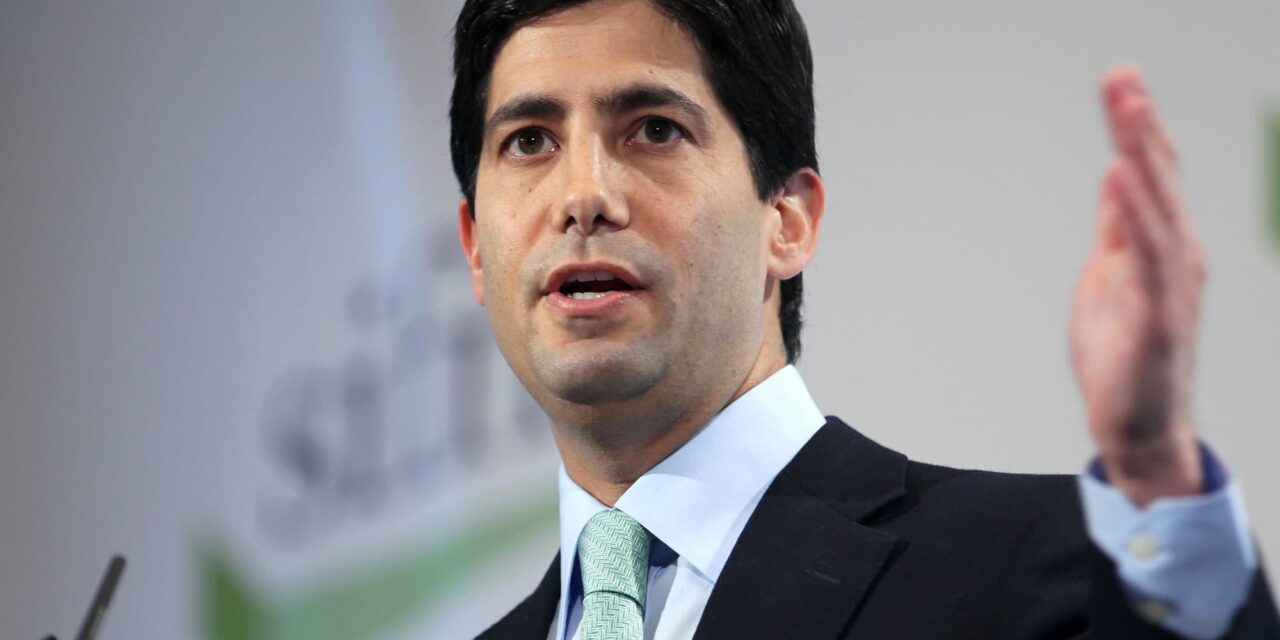
The confirmation process for Kevin Warsh, President Donald Trump’s nominee to chair the Federal Reserve, has hit another delay.
The Senate Banking Committee had been expected to hold a hearing on April 16, but as of Thursday evening the panel had not set or announced a formal date, and under its own rules it must give five days’ advance notice before a hearing can take place, making Tuesday April 21 the earliest mathematically possible slot. The practical window for confirming Warsh before Powell’s term expires on May 15 is now extremely tight and narrowing by the day.
The immediate cause of the paperwork delay is Warsh’s financial disclosure requirements. He is married to Estée Lauder cosmetics heir Jane Lauder, whose net worth is estimated at around $1.9 billion, making the disclosure process substantially more complicated than it would be for a typical nominee. The Banking Committee cannot formally schedule the hearing until that paperwork is received and processed.
But the paperwork is only one layer of a problem that runs considerably deeper. Republican Senator Thom Tillis of North Carolina has vowed to block any vote on Warsh — and any other Fed nominee — until the Justice Department ends its criminal probe into Powell.
That investigation, led by U.S. Attorney for DC Jeanine Pirro, centred on allegations that Powell gave misleading testimony to the Senate Banking Committee about the Fed’s $2.5 billion headquarters renovation project, as reported by Congress.net. A federal judge has already quashed the subpoenas underpinning that probe, with Judge James Boasberg writing bluntly in his ruling that the government had presented “no evidence whatsoever of fraud” and that the investigation’s dominant purpose appeared to be to pressure Powell into either yielding to the president or resigning.
Pirro has said she plans to appeal. Legal observers with relevant experience say that path is genuinely difficult, noting that appeals courts are typically resistant to pretrial litigation and will be looking for a clear and consequential decision rather than a preliminary dispute over subpoenas. The investigation appears stuck, and with it Tillis’s blockade shows no sign of lifting on its own terms.
The collision between Trump’s two stated goals is now unavoidable. He wants Powell gone and Warsh in before mid-May. He also, by all accounts, wants the Justice Department’s pressure on Powell to continue. Those two objectives are directly in conflict, because the investigation is the very thing holding up the confirmation.
Senate Banking Committee chairman Tim Scott has said publicly he does not believe Powell committed a crime, which is a notable statement from the Republican leading the very committee through which Warsh must pass. Scott has expressed hope that the investigation “goes away” — language that reflects where many Senate Republicans actually are on the question, even if they have not said it that loudly.
Powell, for his part, has been unambiguous about his own position. When asked after the March FOMC meeting whether he would remain in his role if Warsh is not confirmed by May 15, he said he would serve as chair pro tem until his successor was approved by the Senate. That would extend his influence over monetary policy beyond his nominal term end date, which is not the outcome the White House envisioned when it began this process.
The next FOMC meeting in late April is technically Powell’s last scheduled one as chair. Whether he presides over it as the sitting chair, as chair pro tem, or steps aside for a newly confirmed Warsh will be one of the more consequential procedural questions in recent Federal Reserve history.
