
A Need for Cohesive Counter-Narcotics Policy
I. Introduction
The illicit opiate market is a flexible one that is capable of avoiding any limitation on its profitability. This makes it difficult to tailor an effective policy response. Because of globalized trade and the ability for players within the market to take on more than one role, any counter-narcotics policy geared toward one specific region and/or portion of the illicit opiate market, such as production in Afghanistan, will be ineffective because of the market’s ability to adapt to such counternarcotic policies by shifting positions and avoiding any limitation on its profitability. The key to licit and illicit business is profit. As long as the illicit opiate market is a profitable one with a higher financial gain, and lower risk than any licit market, the illicit opiate market will continue to consume all participating and non-participating regions.
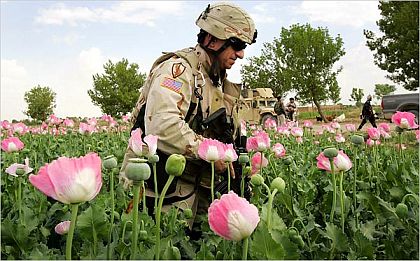 Any reduction wanted within the illicit opiate market must start with a cohesive policy to truly be effective in minimizing its profitability. The word cohesive plays two roles in the previous statement: cohesive in regards to the implementation of a counter-narcotics policy by those states currently affected, and soon to be affected, by the illicit opiate market; and cohesive in regards to the implementation of a counter-narcotics policy that attempts to impact all levels of the illicit opiate market, from the supplying level, to the demand level, to the financing level in an evenly distributed manner. In other words, for the profitability of this mass network to suffer, any threat to it must be a threat to the entire network, by all those wanting to threaten that network. And the main goal behind any threat should be to increase the risks, and decrease any gains for those participating in the illicit opiate market enough to limit the financial lucrativeness of that market.
But the key to the illicit opiate market is the flexibility of it. And so the policies themselves must be just as flexible. The dedication by member states in solving this problem requires long term commitment. However, long term policies unable to flexibly adjust with the market are a mistake. This is because if the policies in place are unable to move just as quick, and be just as flexible as the market, the policy will not have the capability of preventing the market from adapting and maintaining its profitability.
The devastating effects around the world as a result of this resilient market call for a change in our counter-narcotics policies. Supply reducing policies, such as eradicating poppy plants, have proven to be a failure.[1] Today we need counter-narcotics policies that give the necessary deterrence, incentives, competing licit industries, finances put to the actual infrastructure of the countries involved, and assistance in helping these under-developed agriculturally driven countries to exploit their licit resources, all so that the want/need to conduct themselves illicitly is no longer there. The goal is to attack the market as a whole, (suppliers, traffickers, and consumers), by those who are currently affected, and those who can potentially be affected, while also making the licit market less of a risk, more financially lucrative, and easier to exploit for those involved.
In this paper I am going to discuss the commodities involved in the illicit opiate market, specifically within the heroin market, and the players involved in the production, manufacture, trade, and/or use/consumption of those commodities. I am also going to discuss the effects the market has had on today’s society. These effects are devastating, and on a path of epidemic proportions. This paper will show that the market is flexible, adaptable, and resilient. However, the current death grip the illicit opiate market has on today’s society can be alleviated when the business is riskier, no longer as profitable, and has competing businesses that no longer make participation in that market the best option.
II. The Flexibility of the Illicit Opiate Market[2]
From a business perspective, the flexibility of the illicit opiate market is quite beautiful. When one considers the resiliency that is necessary for the illicit opiate market to adapt and overcome obstacles, which have been placed along the way by national and international agencies to eliminate the market, and the market’s continued ability to maintain tremendous profitability, one cannot help but be impressed. In fact, the illicit opiate market has achieved an impressive feat not achieved by most licit industries with fewer obstacles.
To understand the flexibility of the illicit opiate market, an understanding of the commodities being sold and who is selling them is necessary. Once an understanding of the commodities that are sold within the market is established, the roles played by those involved in distributing those commodities is easier to understand since, all states play multiple roles within the market because of the commodities involved. This foundation is necessary before you can really foresee when and what players will shift positions within the market to avoid any limitation on the market’s profitability. The purpose of this section is to explain the commodities of the illicit opiate market, with specific emphasis on the heroin market, and the countries involved in the production, manufacture, trade, and/or use/consumption of those commodities.
A. What’s for Sale: Commodities within the Illicit Opiate Market
When I first began studying the illicit opiate market, I was completely unaware of the fact that heroin did not come from poppy the way apples come from apple trees. In fact, all I knew was that there was a poppy plant, and that heroin was “the most widely consumed illicit opiate in the world.”[3] What I found out was that there were opium,[4] opium alkaloids,[5] acetic anhydride,[6] morphine,[7] and heroin,[8] all being traded within the illicit opiate market;[9] this was essential to understanding how the market could consistently adapt to counternarcotic policies, or even environmental issues, and maintain profitability.
The foundation of the market itself is the poppy plant scientifically known as Papaver Somniferum L.[10] Without that poppy plant none of the illicit opiate market commodities can be made or used. Although there are many varieties of the poppy plant, including thebaine-rich varieties like the “Norman,”[11] Papaver Somniferum L. is the most commonly cultivated poppy plant for the illicit production of opium because of its high levels of morphine.[12]
The poppy plant is able to grow in any ecological habitat; whether or not that habitat is mountainous, flat, cold, hot, irrigated, or not irrigated.[13] This is important because it shows the market’s ability to shift production sites, regardless of the site’s topography, making counternarcotic policies focused on supply reduction in current producing areas less likely to have any long term effect on the market.
And because the plant itself is drought resistant, its ability to survive in environments such as Afghanistan, make it a much more financially safe crop to cultivate than other licit crops that are not as sustainable.[14] The extreme weather, lack of infrastructure, and lack of irrigation in most participating regions, make licit crops, such as wheat, a financial risk to cultivate as compared to poppy crops. These factors reduce the counter-narcotics policies’ long term effectiveness when attempting to replace the poppy crop with licit crops.
The opium gum[15] produced by the poppy plant is a nonperishable commodity.[16] Therefore, if the market were to overproduce opium, instead of oversaturating the market with this supply, the nonperishable commodity could be stored. Furthermore, because the illicit opiate market’s supply is constantly being affected by either counternarcotic policies, and/or environmental issues such as drought, the market’s ability to adapt to a loss in supply by accessing the stored supply allows it to continuously feed its demand, also maintaining its profitability.
The opium itself is a commodity that has the ability to produce another commodity: morphine. Morphine is an addictive substance that can be abused, but its purpose in the heroin market is not for personal use[17]. By acetylating morphine with precursor chemicals like acetic anhydride, the semisynthetic product known as heroin[18], a crude preparation of diamorphine, is obtained.[19] Heroin far surpasses opium and morphine in addictiveness, and in risk of use.[20] The predominant consumption of heroin is through injection, allowing for the possible spread of disease due to contaminated needles.[21] The strength of heroin makes its use more likely to result in death as compared to other illicit opiates.[22] It is the addictiveness, use of needles, and strength that make heroin the most dangerous. Yet, none of these risks are able to reduce heroin’s clientele. Its addictiveness keeps the clientele much more loyal than opium and morphine are able to, establishing a consistent demand.
While the cultivation of illicit poppy can lead to the production of opium and morphine, the combination of morphine and precursor chemicals, like acetic anhydride, can lead to the production of heroin, creating a market with at least four commodities: opium; morphine; acetic anhydride/other precursor chemicals; and heroin. Heroin, however, is the most profitable commodity within the illicit opiate market. The refining of opium into heroin can increase your profitability by 100 times, and, since carrying 100 kilograms of heroin is easier than carrying 1000 kilograms of opium, heroin is much more efficient and cost effective to traffic.[23] This also makes counternarcotic policies focused on supply reduction ineffective because the trade of other commodities involved can still occur.
All of the above makes the illicit cultivation of poppy, and illicit production of opiates, less of a risk, and more financially safe, than any licit crop in Afghanistan, as well as other similar participating regions. The heroin market’s numerous commodities allows for more players to be involved than the traditional Chinese-British Indian opium trade that occurred over a century ago.[24] This makes the heroin market much more of a tangled web than what was experienced with the opium market. And because of this, the illicit opiate market has a plethora of choices for replacing players unable to satisfy their roles within the market.
Furthermore, it is the intertwining of these commodities that allows those who participate in the illicit opiate market to take on more than one role simultaneously. By taking on more than one role, a player’s profitability can be sustained if the counternarcotic policy is not affecting all of its roles. This is because the player will simply increase its participation of the roles not being affected by that counternarcotic policy, and reduce/cease its participation in the role(s) that are being affected by that counternarcotic policy. Because of this, the illicit opiate market is able to adapt to counternarcotic policies only focused on affecting a portion of the market. This is more apparent with the heroin market’s past production site, the Golden Triangle, and its shift to today’s production site, Afghanistan.
B. Who’s responsible for selling the illicit opiate market’s commodities?
Today’s illicit opiate market players are numerous, diverse, flexible, and well connected. These players have gained wisdom from their predecessors throughout the illicit opiate market to take on different roles simultaneously, which is the key to their flexibility. “[T]here is no strict division between regions of supply and demand. The same caution is warranted in examining ‘transit’ regions, which very often are also regions of consumption and possibly add to supply.”[25] Although the previous section of this article was written to explain the actual commodities being exchanged in the market, and how they assist the market in maintaining its flexibility, this section is written to explain who has/is exchanging those commodities, and what role(s) those players have played or play within the market that controls the exchange. This section points out the ability of everyone involved in the illicit opiate market to shift positions instantly.
History is repetitive. Therefore, its ability to predict the future is great. The market’s past players are just as important as its current players. In other words, with an understanding of the market’s past, we can understand the market’s present, and hopefully foresee the market’s future. This is necessary for any counter-narcotics policy to have a long term negative effect on the market. If a counter-narcotics policy is implemented to only effect what is relevant to today, and not what may have been relevant yesterday, or what may be relevant tomorrow, then that counter-narcotics policy will fail in having any long term negative effects on the market.
“[T]oday’s international drug control system is rooted in efforts made a century ago to address the largest substance abuse problem the world has ever faced: the Chinese opium epidemic.”[26] While China was producing much of its opium, more than half of its production took place slightly to the north of Southeast Asia.[27] When China had successfully reduced production and consumption of opiates specifically within its territory, Turkey prohibited the planting, cultivation, and production of opium poppy.[28] Unfortunately, the counternarcotic policies implemented to eliminate the production sites of China and Turkey would not have long term effects on the market itself. Instead, the result would be a shift within the market to a new production site, the Golden Triangle. The result would also be an unaccounted for problem: heroin. The Golden Triangle would become the main producer of illicit opiates for two decades after that shift, maintaining the market’s profitability, and expanding the market’s production line.[29]
During the stronghold of the Golden Triangle, Pakistan and Afghanistan, also known as the Golden Crescent, would begin cultivating illicit opiates as well.[30] Although the Chinese and Turkish market had collapsed giving rise to the Southeast Asian market, the Southeast Asian market had begun collapsing as well.[31] The counter-narcotics policies being implemented at the time would not be implemented by all affected regions in a cohesive manner.[32] With few exceptions,[33] the counter-narcotics policies would be focused on reducing the supply, not the trafficking and/or demand, resulting in the shift of production sites only, and the expansion of demand sites, neither reducing the effect of, nor eliminating, the illicit opiate market.
The illicit opiate market would adapt to the loss of supply in Southeast Asia by shifting its production site to Southwest Asia, where the Golden Crescent[34] was located. As a result, Afghanistan would become the global producer of illicit opiates:
Success in controlling the supply of illicit opium in China in the middle of the 20th century, for example, displaced the problem to the Golden Triangle. Later successes in Thailand displaced the problem to Myanmar. A similar process unfolded in South West Asia from the 1970s onward.[35]
And, as had happened before with China, Turkey, and now the Golden Triangle, the market would adapt to the lack of supply in one area, by exploiting another area, Afghanistan.[36]
Today, with the loss of suppliers in the Golden Triangle,[37] and the flexibility of the illicit opiate market to change its major players, Afghanistan has transcended from poppy cultivator to the number one poppy cultivator, producer/supplier of opium, importer of precursor chemicals, manufacturer of morphine and heroin, and exporter of all of the above.[38] Globally, poppy cultivation has increased 22%, while total opium production has increased by 78%.[39] At the point of extending the member state’s deadline to reduce global supply and demand ,[40] Afghanistan had produced an astonishing 150% more opium in 2009 than it did in 1998.[41] Furthermore, neighboring countries of Afghanistan began to see an increase in participation with the illicit opiate market, and an increase in opiate use, thereby expanding the global demand from 1998 to 2007.[42]
As a result of the illicit opiate market’s shift between suppliers, Afghanistan has taken the lead in production of illicit opiates. And because counternarcotic policies have been focused on reducing the Afghan opiate supply through eradication,[43] Afghans have shifted their cultivation sites to southern regions less regulated by governmental control.[44] The ineffectiveness of supply driven policies is obvious considering the fact that Afghanistan has cultivated at least 104,000 ha a year since 2004 with such policies.[45] Afghanistan has also been at least 70% responsible for the global illicit opium production each year since 2002.[46]
Although Afghanistan experienced some environmental hardships in 2010, it was still able to cultivate an astonishing 123,000ha.[47] One of those hardships was a disease that spread throughout the poppy fields in the major growing areas after flowering in the spring, which maintained the cultivation levels, but lowered the production of opium by 48% because it was too late to plant another crop in the diseased one’s place.[48] However, because the demand would not be affected by this disease, the market was able to adapt to the loss of supply and maintain profitability by increasing the farm-gate price 164%.[49]
This increase in price was the market’s response to the drastic reduction of opium production due to environmental challenges and not counternarcotic policies.[50] Because the demand for illicit opiates was stable, but production in Afghanistan had dropped significantly, and no other region was able to take Afghanistan’s place in supplying that demand, the Afghan market sustained its profitability by adjusting the price of this limited supply. This increase in farm-gate price also occurred when the Taliban prohibited the cultivation of poppy, but not the export of its opium, because again, the supply was limited but not the demand.[51]
Afghanistan’s ability to manufacture heroin is what begins to intertwine Afghanistan with other states involved in the illicit trade of opiates and/or their use/consumption. As stated above, to refine opium into heroin necessary precursor chemicals are needed. These precursor chemicals are not licitly manufactured or used in Afghanistan.[52] But they are licitly manufactured and/or used in other countries for the manufacture of pharmaceuticals.[53] The manufacture, importation, exportation, and use of precursor chemicals are strictly controlled by the United Nations to avoid the diversion of such precursor chemicals into the illicit market.[54] However, there is obvious diversion of precursor chemicals into the illicit market. The “UNODC estimates that 72% of the opium produced in Afghanistan [is] converted to heroin within the country, requiring 10,000 [tons] of chemicals including 1,000 [tons] of acetic anhydride.”[55]
The diversion of such chemicals into the illicit market is as essential to the sustainability of the market as the cultivation of poppy, production of opium, trafficking of commodities, and the demand, making it an essential component of any successful counternarcotic policy. Even complete elimination of all poppy plants today would still not eliminate the reserved stocks of opium from past overproduction. In other words, heroin would still be manufactured with the precursor chemicals and reserved opium, regardless of cultivation, maintaining the market’s profitability and buying it time to shift cultivation sites elsewhere. Therefore, counternarcotic policies must be able to affect the market as a whole to avoid such adaptability, including the diversion of precursor chemicals.
With an understanding of who may be diverting these licit chemicals into the illicit opiate market, counternarcotic policies have the ability to be more effective in preventing such diversion. But, who is sending Afghanistan the necessary chemicals to manufacture heroin? Major opiate pharmaceutical manufacturing countries around Afghanistan are India, Turkey, France, and Spain.[56] Arguably, any of those countries could be providing the chemicals necessary for Afghan opium to be refined into heroin if they are experiencing diversion of their licit resources into the illicit market. The UNODC has noted, based on submitted seizure data, that “[t]he vast bulk of these precursor chemicals are imported from as far away as Western and Eastern Europe, Russia, China and the Gulf States.”[57] And, “Africa [has] emerged as a new target area for traffickers in search of acetic anhydride.”[58]
Because most of the heroin manufacturing facilities have been found in the South and Southwestern part of the country,[59] the ability for these chemicals prohibited in Afghanistan to pass its borders means that counternarcotic policies are still ineffectively focusing on a portion of the market, such as the supply of opium, instead of the entire market, such as the supply of these chemicals and the trading of such supply. Regardless, once the heroin is manufactured, if directly done in Afghanistan, there are a few trading routes that can be used for the trafficking of Afghan heroin to consuming countries. The two main routes have been noted as the Balkan Route[60] and the Northern Route (traditionally known as the Silk Route).[61][62]
The main countries involved in the exporting of Afghan heroin are Pakistan at 40%, the Islamic Republic of Iran at 30%, and Central Asian countries at 25%.[63] These countries are responsible for maintaining the market’s profitability by assisting Afghanistan with the manufacture, exportation, importation, and consumption of its commodities. Because these countries have more of a partnership in the illicit opiate market due to their roles as cultivator, producer, manufacturer, importer, exporter, and consumer of opiates, any counternarcotic policy only implemented to affect Afghanistan will obviously only have an effect on Afghanistan, and not on the market as whole.
Understanding the numerous roles played by participating states today gives an understanding of the states’ capabilities for participating tomorrow, as well as the market’s capabilities for shifting roles when adjusting to any possible limitation on its profitability. Therefore, the numerous roles played by Afghanistan’s partners today, may give hints to who will play what roles tomorrow. These understandings are essential for any counter-narcotics policy to be effective in diminishing the entire market’s profitability over a longer period of time.
Pakistan simultaneously plays the roles of importer, exporter, manufacturer, and consumer within the illicit opiate market. Its ability to traffic precursor chemicals from India and China to Afghanistan,[64] as well as consume Afghan opiates with an estimated demand of 547,000 heroin users, and 145,000 opium users,[65] and export the Afghan heroin to the global market,[66] makes Pakistan just as important in the illicit opiate market as Afghanistan. With an “immediate proximity to heroin processing zones in Afghanistan, notably the adjoining provinces of Hilmand, Nimroz and Kandahar”[67] as well as its immediate proximity to the developing Northern route and the developed Balkan route, both of which traffic the processed Afghan heroin to major consuming markets in Europe, Pakistan’s success in exporting Afghan heroin can be attributed to its location. In fact, the UNODC notes Pakistan as having more opiates trafficked through its borders from Afghanistan than any other country bordering Afghanistan.[68]
Similar to Pakistan, the Islamic Republic of Iran holds numerous roles in the illicit opiate market. Iran, like Pakistan, is a major transit country that exports Afghan heroin along the Balkan Route by trafficking it to Turkey, the Balkan route’s “doorway” to the European Market.[69] Iran is also responsible for trafficking Afghan heroin through the Caucasus[70] rather than Turkey. This is a relatively recent variant on the Balkan route labeled the Northern Balkan route.[71] Both the Balkan Route and the more recent Northern Balkan Route, lead to the largest consumer of Afghan heroin from Iran, the European market.
The more traditional Balkan Route technically begins with Iran and then Turkey.[72] However, some reports will note Turkey as the starting point.[73] Furthermore, as discussed above, heroin exported to Pakistan is also exported to Iran making it a starting point for the Balkan Route as well.[74] Either way, once the Afghan heroin enters Turkey from Iran, it is then trafficked to Southeast European countries.[75] The main consuming countries are “namely the United Kingdom (some 19mt), Italy (about 18 mt), France (an estimated 10 mt) and Germany (approximately 7 mt).”[76]
The other route coming from Afghanistan is the Northern Route. This route travels from Afghanistan, through the Central Asian Republics[77] towards the Russian Federation.[78] The main Central Asian country within the Northern Route is Kazakhstan. In fact, according to the UNODC, Kazakhstan holds the same importance with the Northern Route as Turkey holds with the Balkan route because Kazakhstan is also considered a “doorway” to a major consuming market; the Russian Federation.[79]
The Russian Federation, as most countries within the market, plays numerous roles simultaneously.[80] Originally only a transit country for Afghan opiates to Eastern Europe,[81] today the Russian Federation is a major consumer as well with an estimated 1.5-1.8 million users[82]:
Between 1998 and 1999, the number of Russian users increased 400 percent, absorbing much of the product that used to go on to other markets. As wealth in Russia (i.e., Moscow and St. Petersburg) rose over the past decade, the Russian consumer market helped absorb even more of the product flow.[83]
Also, as noted above, the UNODC claims that precursor chemicals supplied to Afghanistan for the manufacture of heroin are originating from the Russian Federation.[84]
The Central Asian countries[85] have also followed in the footsteps of the Russian Federation, transitioning from trafficker, to trafficker, exporter of precursor chemicals, and consumer.[86] Today the Russian market is the second major consumer of Afghan heroin consuming an estimated 70 mt, while the Central Asian countries consume an estimated 11 mt.[87] Because opium (not refined into morphine or heroin) is also consumed by the Central Asian countries and the Russian Federation, it is estimated that “approximately 780-800 mt of opiates are trafficked annually along this route.”[88]
China also plays more than one role within the market. As discussed above, China is an exporter of precursor chemicals to Afghanistan[89] and consumer of Afghan heroin. Although China was once a consumer of opiates from the Golden Triangle, “[f]ollowing the sharp decrease [of] opium production in Myanmar, Afghan heroin started being shipped to China.”[90] Even with Myanmar’s current production of 330 mt of opium[91], the Golden Triangle’s heroin supply has not been sufficient enough to meet all of the Chinese demand[92] since after 2002.[93] Furthermore, the heroin trafficked into China that is not consumed there is sent to Australia.[94] As the Chinese demand began to look at Afghanistan’s supply after its inability to access sufficient supply from the Golden Triangle, Australia, part of the oceanic region and also traditionally a consumer of opiates from the Golden Triangle, began looking to Afghanistan as well.
The market today is diverse, multifaceted, flexible, and resilient. Afghanistan will continue to be the major cultivator of poppy, producer of illicit opiates, importer of precursor chemicals, manufacture of heroin, and exporter of illicit opiates for the global demand spreading addiction, disease, and death thanks to its ideal location. Pakistan and Iran will continue to be business partners in the spread of Afghan heroin. Countries such as Turkey, and those in the Caucasus, along the Balkan route, and in Central Asia, will all continue their role as trafficker and simultaneously take on the role of consumer as well, allowing the demand of illicit opiates to increase, or at least maintain stability.
As has been shown with the Golden Triangle and Afghanistan, when the supply/demand is attacked in only one area, only affecting one portion of the market, the market will flexibly adapt to the situation and shift the supply/demand to another location. These shifts were due to the lack of cohesion among affected states to implement a counternarcotic policy that would prevent the market from exploiting regions not affected by that counternarcotic policy, but still affected by the market. Profitability keeps any business afloat. Whether or not the Golden Triangle or Afghanistan, or any other country, provides the supply is irrelevant: the supply and the demand will always come from somewhere as long as the profitability of providing them is there.
With so many countries playing similar roles within the market, the market has a plethora of choices to exploit if Afghanistan begins to drop its supply of illicit opiates. According to the 2010 World Drug Report:
Turning to the Americas, the average amount of opium estimated to be produced in Latin America and Mexico was around 130 mt per year until 2006. In 2008, a reported 120% increase in opium production in Mexico made it the third biggest opium producing country after Myanmar with 325 mt potentially produced in 2008. Some data also suggest that limited illicit cultivation takes place in other countries, such as Egypt and India. At the time of writing, no information was available on the quantities cultivated and produced, which, in the case of Egypt, may be negligible. Algeria reports the eradication of approximately 80,000 opium poppy plants every year, but this production appears to be limited to supplying the local market.23 Finally, there is illicit cultivation in some CIS countries. Ukraine, the Republic of Moldova and the
Russian Federation for example seem to be self-supplied for their own local market of poppy straw derivative solution (Kompot).[95]
Afghanistan was once like the above stated countries, self-supplying to the local market. Although the countries mentioned in this section are considered to be the main producing, trafficking, and consuming destinations in the Afghan heroin market, with the fall of the Golden Triangle, “Afghan heroin has started to be trafficked to all regions of the world.”[96]
Because counternarcotic policies have only recently been dealing with the demand aspect of the market, although financially speaking supply reduction is the focus of most counternarcotic policies, demand in trafficking regions has increased over the past year, establishing a new area for the demand to come from if Europe were to reduce its demand. If counternarcotic policies are to affect today’s supply of the illicit opiate market, as stated by the World Drug report, the illicit opiate market, specifically the heroin market, is ready and able to shift production sites if Afghanistan loses its place. The question becomes: if counter-narcotics policies successfully reduce the market for today, who will satisfy the roles necessary to maintain the market’s profitability and keep it afloat tomorrow? Because tomorrow’s players are just as important as today’s players in maintaining the illicit opiate market’s profitability.
III. Effects of the Market
Counternarcotic policies have been attempting to reduce or eliminate the spread of opiates since 1909.[97] Although no country has experienced the addiction rate of China,[98] many countries are experiencing things that were not present during the Chinese opium epidemic: heroin and HIV. [99] Heroin is much more addictive than opium, at times injected with contaminated needles leading to the spread of HIV, and able to result in death much quicker than opium.
Although the 2008 World Drug Report claims that the International Drug Control System has improved the situation over the past hundred years,[100] the reality is that what we are comparing to a hundred years ago is not comparable. The substances are different. Opium use is really limited to five countries.[101] The opiate business has expanded its line of products. And one of those products, heroin, is used in all seven continents, far surpassing the five countries that use opium.
The addictiveness of these new products has caused the demand to be a much more loyal clientele than what was experienced during the Chinese opium epidemic. This makes it much more difficult to eliminate, or at least significantly reduce, the demand. Iran, India, USA, and Canada, along with other countries have dramatically increased in opiate use as compared to the dramatic decrease of opiate use in all of China and Southeast Asian countries.[102] Furthermore, as discussed above, the added products to this business inevitably result in an increase of participants intertwining the involvement of more states than ever before.
The purpose of this section is to highlight the extreme severity of today’s situation by giving statistical information behind the grave consequences of not limiting the stronghold that the heroin market has on our society. Other than profitability, the effects of this market involve the spread of addiction, disease, and death. The most vulnerable have been the trafficking countries which have all shown increasing levels of HIV cases and deaths as a result of the Afghan heroin trade. The World Health Organization’s 2010 Aids report specified that in Eastern Europe and Central Asia persons who inject drugs have high HIV transmission rates that have almost tripled since 2000.[103] In fact, of the 1.8 million people who inject drugs in the Russian Federation, it is estimated that more than one third of them are living with HIV.[104] The Ukraine alone has an estimated 39%-50% of its people that inject drugs living with HIV.[105] In Central Asia, “the total number of officially registered HIV cases … has increased 19-fold in the last decade: from 1,641 cases in 2000 to 30,993 cases in late 2008.”[106]
All in all, “[a]n estimated 15.9 million [11.0 million–21.2 million] people inject drugs worldwide; of these, nearly 20%, an estimated 3 million [500 000–5.5 million] are living with HIV.”[107] However, the spread of HIV is not limited to the sharing of needles: “an estimated 35% of women living with HIV probably acquired HIV through injecting drug use, while an additional 50% were probably infected by partners who inject drugs.”[108] The Executive Director of the Afghanistan Insurgency and Crime Report said it best:
Every year, more people die from Afghan opium than any other drug in the world: perhaps 100,000 globally. The number of people who die of heroin overdoses in NATO countries per year (above 10,000) is five times higher than the total number of NATO troops killed in Afghanistan in the past 8 years, namely since the beginning of military operations there in 2001. The number of addicts in the Russian Federation has multiplied by 10 during the past 10 years, and they now consume a staggering 75-80 tons/year of Afghan heroin. More Russian people die from drugs per year (at present 30,000-40,000, according to government estimates) than the total number of Red Army soldiers killed during the Soviet invasion and the ensuing 7-year Afghan campaign. Despite major efforts to cope with drug trafficking, the Islamic Republic of Iran is swamped by Afghan opium: with its estimated 1 million opiate users, Iran faces one of the world’s most serious opiates addiction problem. Central Asia, once only a conduit for Afghan heroin, is now a major consumer- a habit that is resulting in an HIV epidemic caused by injecting drug use.[109]
For hundreds, if not thousands of years,[110] opiates have caused the spread of addiction, disease, and death.[111] The countries involved in today’s illicit opiate market tend to be underdeveloped, impoverished, war torn countries in need of licit substances to exploit. The continuation of these countries’ addiction with illicit opiates will never allow for the elimination, or at least the reduction, of the illicit opiate market, thereby continuing the spread of addiction, disease, and death, and maintaining the market’s profitability, the key to the market’s success.
IV. Conclusion
In 1998 the United Nations’ member states set a goal to “eliminate or significantly reduce” global drug supply and demand over the following 10 years.[112] In 2008, at the end of those 10 years, Member States were still “gravely concerned about the growing threat posed by the world drug problem;”[113] and rightfully so. The United Nations’ main concern, the illicit opiate market, had not been significantly reduced, let alone eliminated.[114]
Traditionally, counternarcotic policies have not been implemented by all affected states in a cohesive manner. Because of this, the market has been able to adapt to these counternarcotic policies by shifting its production area to a region that is not being affected by those counternarcotic policies. Therefore, the cultivation and production of opiates has consistently shifted from one producing region to another. Furthermore, the counternarcotic policies have traditionally been focused on supply reduction only, and not on reducing the entire market as a whole. The market’s demand, and ability to trade with that demand, has stayed consistent. And because of this, the profitability of the market has been sustained by either an increase in price due to a loss of supply and not demand, or by shifting production areas to avoid the effect of counternarcotic policies.
In 2009, the United Nations made a political declaration and plan of action on international cooperation towards an integrated and balanced strategy to counter the world drug problem.[115] Resolutions pertaining to the trafficking of illicit substances, money laundering, and abuse rates, all had one thing in common: they were labeled by the United Nations as global threats that needed to be dealt with under the principle of “shared responsibility” which required cooperation and participation by all nations involved.[116] Progress towards significantly reducing or eliminating the world drug problem was not, and is still not at the point of being labeled successful. Although no longer are the days of the free drug trade, which resulted in the Chinese opium epidemic, the control and prohibition of that trade has created an illicit market.[117] And today’s illicit opiate market spreads far more destruction than ever imaginable during the Chinese opium epidemic.
Every policy implemented in the last 12 years is still focused on either Afghanistan, or a small region of the illicit opiate market, giving the market the ability to exploit other regions not affected by these policies. Too much emphasis on Afghanistan alone, or Afghanistan, Pakistan, and Iran, only is a mistake. The emphasis on the Golden Triangle created a loss in production there, but it allowed Afghanistan to take its place in the illicit opiate market. And now, “[b]y itself, Afghanistan provides 85% of the estimated global heroin and morphine supply, a near monopoly.”[118]
This shift of producing areas from the Golden Triangle to Afghanistan has led to an increase of opiate use in the transit countries surrounding it.[119] As of now, the illicit opiate market is still a profitable one generating an estimated “turnover of up to US$65 billion, of which some US$55 billion [is] for heroin alone”[120] with an estimated demand of 15 million people, most consuming heroin,[121] and a supply that is capable of feeding that demand for another two years even if production ceased completely.[122] The likelihood of meeting this deadline is at this point small, if not impossible. Markets such as the Chinese and Myanmar market, overthrown by international counternarcotic policies and Afghanistan, are presently on the rise in supply and demand of illicit opiates[123] which shows that the counternarcotic policies are unable to have long-term effects because of their lack of flexibility to adapt to the ever changing market. New markets such as the Russian Federation market, Central Asian market, the Caucasus market, and the African market, are also on the rise in supply and demand because policies have not traditionally focused on those areas.
Policy recommendations needed to alleviate the current death grip of the illicit opiate market, particularly the heroin portion of the market, must involve making the business of illicit opiates riskier, no longer as profitable, and unable to compete as effectively with licit businesses so that participation in the licit market becomes the best option, diminishing the power of the illicit opiate market, and loosening its death grip on society. In today’s age we need counter narcotics policies that give the necessary deterrence, incentives, competing licit industries, finances put to the actual infrastructure of the countries involved, and assistance in helping these under-developed agriculturally driven countries to exploit their licit resources, all so that the want/need to conduct themselves illicitly is no longer there. The goal is to attack the market as a whole, suppliers, traffickers, and consumers, by those who are currently affected, and those who can potentially be affected, while also making the licit market less of a risk, more financially lucrative, and easier to exploit for those involved.
The Global Illicit Opiate Market is one that can be tackled. Maybe not eliminated, but its control over millions of persons around the world can be diminished. Tony White stated accurately that the “illegal drugs industry must be deflated slowly by forcing down the value of drugs as a commodity.”[124] Again, the goal is to diminish the profitability of the heroin market, and raise the profitability of licit markets within participating regions. The risk with participating in the illicit market must be higher than that of participating in the illicit market. Policies must also be as flexible as the market itself. Focusing on one region based on its current participation is a mistake since the market has proven throughout time its adaptability to such policies.
By creating a cohesive policy that attacks the market on all levels, the market has less of an opportunity to adapt to those policies by doing things such as raising the price to deal with a loss in production but not demand. By creating a policy that is cohesively implemented by member states, the market has less of an opportunity to adapt to those policies by doing things such as shifting production sites when one area is under less control than another. And understanding the market so that the ability to foresee where it will go next when current areas reduce demand and/or production is key to any policy’s long term success. If the focus of any policy is only on today’s market, and not tomorrow’s market, the ability to prevent the reoccurrence of this persistent problem is almost non-existent.
Notes
[1] Tom Kramer, From Golden Triangle to Rubber Belt? The Future of Opium Bans in the Kokang and Wa Regions, Transnational Institute, July 2009, httP://idpc.net/sites/default/files/library/TNI_briefing%2029_golden%20triangle%20to%20rubber%20belt.pdf
(“The Kokang and Wa regions in northern Burma opium bans have ended more than a century of poppy cultivation. Yet these bands had dramatic and negative consequences for the local communities. The dramatic reduction of the ex-poppy farmer’s income, which was estimated in northern Burma to be about 45 per cent, drove those poppy-growing communities into chronic poverty affecting their food security and ability to purchase medicines.”)
[2] There is also the diversion of licit opiates into the illicit market. However, to narrow the focus of this paper, all facts contained herein are only relevant to the traditional illicit opiate market encompassing the opium and heroin markets. I will not be discussing any pharmaceutical opiates, or any licit commodities such as poppy straw in this section. Licit cultivation of poppy, licit production of poppy straw or licit production of opium, all for pharmaceutical use is not relevant to this paper. However, the diversion of precursor chemicals needed for the manufacture of licit opiate pharmaceuticals will be discussed in this paper because those same chemicals are used in the manufacture of heroin.
[3] U.N. Office on Drugs and Crime [UNODC], 2010 World Drug Report, 19 (United Nations Publications 2010)
[4] 1961 Single Convention on Narcotic Drugs as Amended by its 1972 Protocol, art. 1(p), Mar. 25, 1972 (“Opium” means the coagulated juice of the opium poppy.”); See Also, The Senlis Council, FEASIBILITY STUDY ON OPIUM LICENSING IN AFGHANISTAN FOR THE PRODUCTION OF MORPHINE AND OTHER ESSENTIAL MEDICINES 14 (2005) (“Opium: the coagulated juice of the opium poppy. (Article 1, 1961 Convention). Opium is the air-dried latex obtained by scoring the unripe seed heads of opium poppy. It contains morphine, codeine and thebaine, and a variable mixture of other alkaloids including noscapine and papaverine.”)
[5] The Senlis Council, FEASIBILITY STUDY ON OPIUM LICENSING IN AFGHANISTAN FOR THE PRODUCTION OF MORPHINE AND OTHER ESSENTIAL MEDICINES 13 (2005) (“Alkaloid: An organic compound derived from plants. Opium alkaloids used in medicine include morphine, codeine, thebaine, papaverine and noscapine.”)
[6] U.N. Int’l Narcotics Control Board [INCB], 2009 Annual Report, 30 (United Nations Publications 2010) (“Acetic anhydride: the key precursor chemical used in the illicit manufacture of heroin”)
[7] The Senlis Council, FEASIBILITY STUDY ON OPIUM LICENSING IN AFGHANISTAN FOR THE PRODUCTION OF MORPHINE AND OTHER ESSENTIAL MEDICINES 14 (2005) (“Morphine: the principal alkaloid derivative of opium.”); See Also, Id. at 63 (“It was first isolated by that was first isolated in pure form from dried poppy resin by German pharmacist, Friedrich W. Serturner in 1805.”)
[8] Id. at 64 (“In 1870 chemists would synthesize a substitute for morphine by acetylating it, and in 1898 Bayer pharmaceutical company would make this drug, 3,6-diacetylmorphine, available under the trademarked brand name heroin”); See Also, U.N. Office on Drugs and Crime [UNODC], 2008 World Drug Report, 188 (United Nations Publications 2008) (“… became available as a pharmaceutical preparation in 1898. “Ironically, it was originally marketed as a non-addictive alternative to morphine, which was already proving problematic in many areas.”)
[9] For purposes of narrowing the breadth of this paper I did not include other commodities like poppy straw and illicit opiate pharmaceuticals. However, poppy straw has been interdicted among the Russian Federation and CARs borders for the use of manufacturing heroin. Furthermore, illicit opiate pharmaceuticals, particularly in the U.S., have a high demand in the illicit market and is an issue worth exploring further.
[10] The Senlis Council, FEASIBILITY STUDY ON OPIUM LICENSING IN AFGHANISTAN FOR THE PRODUCTION OF MORPHINE AND OTHER ESSENTIAL MEDICINES 50 (2005) (“Papaver Somniferum L. is not the only poppy plant in existence, however, it is the most commonly used for illicit purposes due to its high morphine content. Also, there are many types of Papaver Somniferum L. that are cultivated, even in Afghanistan.”)
[11] Id. at 31 (“Alteration to poppy types may yet have a powerful impact in an opium poppy industry as evidenced by the top1 variety of poppy (also known as .Norman.) successfully developed in Australia to produce a poppy rich in thebaine . and low in morphine . now extensively cultivated in Tasmania.”)
[12] See FN 10 Above
[13] This can be inferred from the poppy plant’s cultivation in Afghanistan, France, Spain, India, Turkey, China, Australia, Hungary, Egypt, Mexico, Columbia, just to name a few.
[14] Id. at 32 (“… agricultural and topological factors in many areas (including susceptibility to drought,for example) diminish the possibilities for the cultivation of wheat or other crops.”)
[15] U.N. Office on Drugs and Crime [UNODC], 2010 Afghan Opium Survey, 16 (United Nations Publications 2010) “… [h]arvesting technique used in Afghanistan consists of lancing the fully developed but still green opium capsules. Liquid plant juice (opium latex) oozes out of the cuts, dries on the capsules to turn into opium gum, and is scratchd off the other day.”)
[16] The Senlis Council, FEASIBILITY STUDY ON OPIUM LICENSING IN AFGHANISTAN FOR THE PRODUCTION OF MORPHINE AND OTHER ESSENTIAL MEDICINES 249 (2005) (“opium gum has a very long shelf life and can gain value over time.”)
[17] U.N. Office on Drugs and Crime [UNODC], 2010 World Drug Report, 12 FN 3 (United Nations Publications 2010) (“Morphine represents an intermediate step in the processing of opium to heroin, and is rarely consumed as a drug in its own right.”)
[18] The Senlis Council, FEASIBILITY STUDY ON OPIUM LICENSING IN AFGHANISTAN FOR THE PRODUCTION OF MORPHINE AND OTHER ESSENTIAL MEDICINES 250 (2005) (“The process of making heroin out of morphine involves boiling morphine and a common chemical, acetic anhydride, for some hours, along with sodium carbonate, activated charcoal, chloroform, ethyl alcohol, ether, and acetone.”)
[19] U.N. Office on Drugs and Crime [UNODC], Strategic Programme Framework for Afghanistan 2006-2010 38 (United Nations 2006) (“Recent surveys and analysis estimate that more than 70% of the Afghan opium production is converted into heroin within Afghanistan. At current production levels, this requires the availability of an estimated 1,000 tons of acetic anhydride (AA) and about 9,000 of other chemicals and precursors in the country every year. Afghanistan has neither local production nor local licit use for AA, and a detailed assessment on the other chemicals used for clandestine heroin production has been started to ascertain their types, local availability/use and sources.”)
[20] U.N. Office on Drugs and Crime [UNODC], 2010 World Drug Report, 20 (United Nations Publications 2010) (“ … heroin remains the most problematic opiate internationally.”); See Also, Id. at 37 (“More users die each year from problems related to heroin use, and more are forced to seek treatment for addiction, than for any other illicit drug.”)
[21] Id. at 30 (“Their use can lead to severe dependence and is often associated with IDU-related HIV/AIDS and hepatitis B and C, as well as high mortality rates.”)
[22] Id. at 30 (“The mortality rate for dependent heroin users is between 6 and 20 times that expected for those in the general population of the same age and gender, as the difference between a ‘recreational dose’ and a ‘fatal’ one is small, and variations in street drug purity can result in overdoses. Thus, in most countries, opiates consumption constitutes the main cause of drug-related deaths.”)
[23] STRATFOR Global Intelligence, Afghanistan: Global Trade for Illicit Opiates 3 (March 29, 2010)
[24] The Chinese Opium Trade involved the trade of opium only. And not the trade of morphine and/or heroin.
[25] U.N. Office on Drugs and Crime [UNODC], 2010 World Drug Report, 46 (United Nations Publications 2010)
[26] U.N. Office on Drugs and Crime [UNODC], 2008 World Drug Report, 173 (United Nations Publications 2008)
[27] Id. at 177 (“Production was reported from 20 Chinese provinces. More than 40% of the total production took place in the province of Szechwan, followed by Yunnan. Yunnan province is located in southern China, bordering Myanmar, and Szechwan province is located north of Yunnan. In other words, more than half of China’s opium production took place slightly to the north of the geographical area which would later be known as Golden Triangle (Myanmar, Laos and Thailand), one of the main sources of illicit opium in the 20th century.”)
[28] Id. at 201 (citing FN 175-176) (This would continue until 1974, at which point Turkey would allow the licensed cultivation of poppy using the poppy straw method.); Id. at 203 (citing FN 186) (And “[i]nitial progress made in curbing the global heroin problem [would stall] as the void created by the strengthening of controls in Turkey … [would] soon [be] filled by rising opium production in … the Golden Triangle.”)
[29] Id. at 200 (Myanmar alone would be the largest illicit opiate supplier.); See Also, Drug Policy Alliance, South East Asia: The Golden Triangle, (2011) http://www.drugpolicy.org/global/drugpolicyby/asia/seasia/ ; See Also, Central Asia-Caucasus Institute & Silk Road Studies Program, Pierre-Arunaud Chouvy, Afghanistan’s Opium Production in Perspective (2006).
[30] U.N. Office on Drugs and Crime [UNODC], 2008 World Drug Report, 203United Nations Publications 2008) (“After 1979, there was a slow shift of opium production to neighboring Pakistan and eventually to Afghanistan.”)
[31] See, U.N. Office on Drugs and Crime [UNODC], 2008 World Drug Report (United Nations Publications 2008); See Also, Central Asia-Caucasus Institute & Silk Road Studies Program, Pierre-Arunaud Chouvy, Afghanistan’s Opium Production in Perspective (2006).
[32] See, The Senlis Council, Impact Assessment of Crop Eradication in Afghanistan and Lessons Learned from Latin America and South East Asia, 85-110 (MF Publishing Ltd January 2006)
[33] Id.
[34] Golden Crescent: Afghanistan and Pakistan.
[35] U.N. Office on Drugs and Crime [UNODC], 2007 World Drug Report 216 (United Nations Publications 2007)
[36] U.N. Office on Drugs and Crime [UNODC], 2010 World Drug Report 42 (United Nations Publications 2010) “Expressed as a proportion of the global illicit opium production, Afghanistan’s share rose from around 20% in 1980 to 70% in 2000, and to more than 90% since 2006. This is directly related to decreased output in the ‘Golden Triangle’, encompassing Thailand, the Lao People’s Democratic Republic and Myanmar, the world’s leading opium producer in the 1970s and 1980s. Between 2003 and 2008, opium production in Myanmar fell by 59%, from 810 to 410 mt. Production in the neighboring Lao People’s Democratic Republic also declined dramatically, from more than 120 mt in the 1990s to around to 10 mt in recent years. Thailand’s production is negligible; it has not reported any significant cultivation since 2003.”); See Also, Id. at 41 (“Afghan opium is now the only known source of heroin consumed in Europe and the Russian Federation,” the two largest heroin markets within the illicit opiate market.”)
[37] Id. at 138
[38] Id.
[39] Id. at 12
[40] See, U.N. Economic and Social Council, Report on the fifty-second session, E/2009/28 E/CN.7/2009/12, Mar. 14, 2008 & Mar. 11-20, 2009 Political Declaration and Plan of Action on International Cooperation towards an Integrated and Balanced Strategy to Counter the World Drug Problem (2009)
[41] U.N. Office on Drugs and Crime [UNODC], 2010 World Drug Report 32 (United Nations Publications 2010) (“Increases in Afghanistan more than offset remarkable declines in South-East Asia during that period. There were encouraging declines in the last three years, but Afghan production was still more than 150% higher in 2009 than in 1998. With strong increases after 2005, production seems to have well exceeded world demand and led to the creation of large stockpiles, but it is clear that the global opiate market has not been eliminated, or significantly reduced, since 1998.”)
[42] U.N. Office on Drugs and Crime [UNODC], 2009 World Drug Report 33 (United Nations Publications 2009) (“The highest levels of use (in terms of the proportion of the population aged 15-64 years) are
found along the main drug trafficking routes close to Afghanistan.”)
[43] See, The Senlis Council, Impact Assessment of Crop Eradication in Afghanistan and Lessons Learned from Latin America and South East Asia 9-38 (MF Publishing Ltd 2006)
[44] U.N. Office on Drugs and Crime [UNODC], All Afghan Opium Surveys (United Nations Publications)
[45] U.N. Office on Drugs and Crime [UNODC], 2010 Afghan Opium Survey, 2, Figure 1 (United Nations Publications 2010)
[46] European Monitoring Centre for Drugs and Drug Addiction, The State of the Drugs Problem in Europe Annual Report 2010 6, Figure 1 (Luxembourg: Publications Office of the European Union 2010)
[47] U.N. Office on Drugs and Crime [UNODC], 2010 Afghan Opium Survey, 2 (United Nations Publications 2010)
[48] Id. at 2 (“Total opium production in 2010 was estimated at 3,600 metric tons (mt), a 48% decrease from 2009. The sharp decline was due to the spread of a disease that affected opium fields in the major growing provinces, particularly Hilmand and Kandahar. The disease started to appear in the fields after flowering in spring. This was too late to plant another crop, therefore the disease did not change the area under opium cultivation.” “The major effect of the disease was visible in the yield which dropped to 29.2 kg/ha, a 48% reduction from 2009.”)
[49] Id. at 22 (“In 2010, the average farm-gate price of dry opium at harvest time (weighted by production) was US$ 169/kg, a 164% increase from 2009.”)
[50] Id. at 22 (“The rapid increasing trend is a market response to the drastic reduction of the opium production which is due to the spreading of the opium disease in the major growing areas.”)
[51] David Mansfield and Adam Pain, Afghanistan Research and Evaluation Unit [AREU], Counter-Narcotics in Afghanistan: The Failure of Success, 2 (Dec. 2008) (“The Taliban prohibition of 2001 led to an increase in the farm-gate price of opium, not only encouraging the return to cultivation the following year but also attracting new entrants.”)
[52] U.N. Int’l Narcotics Control Board [INCB], 2009 Annual Report, 30, ¶145 (United Nations Publications 2009) (“In 2008, the Government of Afghanistan informed the Board that there was no legitimate use for acetic anhydride in Afghanistan and requested all producing and trading countries not to authorize any exports of acetic anhydride to that country.”)
[53] See U.N. Int’l Narcotics Control Board [INCB], 2009 Annual Report, 30, ¶145 (United Nations Publications 2009); See Also, United Nations 1988 Convention Against Illicit Traffic in Narcotic Drugs and Psychotropic Substances, Dec. 20, 1988.
[54] See, 1961 Single Convention on Narcotic Drugs as Amended by its 1972 Protocol, Mar. 25, 1972; See Also, United Nations 1988 Convention Against Illicit Traffic in Narcotic Drugs and Psychotropic Substances, Dec. 20, 1988.
[55] U.N. Office on Drugs and Crime [UNODC], Strategic Programme Framework for Afghanistan 2006-2010, 5 (United Nations 2006)
[56] See, 21 C.F.R. Part 1312 (Also known as the 80/20 rule. Australia was not mentioned because it is not likely that Australia is diverting its precursor chemicals to Afghanistan.)
[57] U.N. Office on Drugs and Crime [UNODC], Strategic Programme Framework for Afghanistan 2006-2010, 30 (United Nations 2006)
[58] U.N. Int’l Narcotics Control Board [INCB], 2009 Annual Report, 30, ¶145 (United Nations Publications 2009)
[59] See, U.N. Office on Drugs and Crime [UNODC], 2010 Afghan Opium Survey (United Nations Publications 2010)
[60] U.N. Office on Drugs and Crime [UNODC], 2010 World Drug Report 53 (United Nations Publications 2010) (“The Balkan route to West and Central Europe runs from Afghanistan via the Islamic Republic of Iran, Turkey and south-east European countries. This route and its various branches form the artery that carries high purity Afghan heroin into every important market in Europe. UNODC estimates that 37% of all Afghan heroin or 140 mt is annually trafficked into the Islamic Republic of Iran, from Afghanistan and Pakistan, towards the European market.”)
[61] Id. at 48 (“Unlike other major routes out of Afghanistan which have existed for decades, the Northern route through Central Asia and into the Russian Federation is a relatively recent phenomenon, only taking shape in the mid-1990s.” Estimated 25% of Afghan heroin or 95 mt, is annually trafficked through the Central Asian Republics.)
[62] Id. at 56 (“Considerable quantities of heroin are trafficked to Europe by sea and air, but the Balkan route resembles the Northern route in that the bulk of the flow proceeds by land.”)
[63] U.N. Office on Drugs and Crime [UNODC], Addiction, Crime, and Insurgency: The Transnational Threat of Afghan Opium, 11 (United Nations Publications 2009)
[64] Id. at 71 (“The manufacturing of acetic anhydride was discontinued in Pakistan in 1995, but the country borders two major chemical producers, China and India. Based on seizure data, Pkaistan appears to be a major source of precursors entering Afghanistan.”)
[65] Id. at 48 (“[T]here are approximately 547,000 heroin and 145,000 opium users in Pakistan.”),
[66] Id. at 38 (The UK alone “estimate[s] that 25 pe cent of the heroin found on their market is shipped directly from Pakistan to the UK (by air or sea).”)
[67] U.N. Office on Drugs and Crime [UNODC], 2010 World Drug Report 60 (United Nations Publications 2010)
[68] Id. at 60 (“More Afghan opiates pass through Pakistan than any other country bordering Afghanistan.”)
[69] Id. at 53-54 (“UNODC estimates that 37% of all Afghan heroin or 140 mt is annually trafficked into the Islamic Republic of Iran, from Afghanistan.” “Most of the heroin, around 30% (105-110 mt) of Afghanistan’s total production, continues to move west/south-west into the Islamic Republic of Iran towards Turkey and further to Europe.”)
[70] Caucasus countries are Georgia, Armenia, and Azerbaijan.
[71] Id. at 54 (“The so-called ‘northern Balkan route’ is a relatively recent variant on the Balkan route which transits the Caucasus rather than Turkey. Every year, approximately 9 mt of heroin are estimated to be trafficked from the Islamic Republic of Iran along this route. Joining this flow is a smaller volume of about 2 mt from Central Asia (not shown on map. In all, 11 mt of heroin are estimated to enter the Caucasus. Some 4 mt are either consumed or seized.”)
[72] Id. at 38 (“Seizure statistics indicate that the vast majority (98 per cent) of the heroin seized in Turkey comes from the Islamic Republic of Iran.”)
[73] Id. at 38 See Table 12
[74] U.N. Office on Drugs and Crime [UNODC], 2010 World Drug Report (United Nations Publications 2010)
[75] U.N. Office on Drugs and Crime [UNODC], Addiction, Crime, and Insurgency: The Transnational Threat of Afghan Opium, 38 (United Nations Publications 2009) (“According to seizure information from UNODC and WCO for the years 2000-2008, 84 per cent of the heroin seized in Europe-(85-90) tons – was shipped from South-Eastern European (Balkan) countries.”)
[76] U.N. Office on Drugs and Crime [UNODC], 2010 World Drug Report 41 (United Nations Publications 2010)
[77] Central Asian Republics: Tajikistan, Uzbekistan, Turkmenistan, Kyrgyzstan and Kazakhstan
[78] U.N. Office on Drugs and Crime [UNODC], 2010 World Drug Report 48 (United Nations Publications 2010) (“UNODC estimates that 25% of all Afghan heroin –or 95 mt- are trafficked each year from Afghanistan into the Central Asian Republics (CARs) towards the Russian Federation.”) (citing U.N. Office on Drugs and Crime [UNODC], Addiction, Crime, and Insurgency: The Transnational Threat of Afghan Opium (United Nations Publications 2009)
[79] See, U.N. Office on Drugs and Crime [UNODC], Addiction, Crime, and Insurgency: The Transnational Threat of Afghan Opium, 50 (United Nations Publications 2009)
[80] U.N. Office on Drugs and Crime [UNODC], 2010 World Drug Report 51 (United Nations Publications 2010) (“The remainder, approximately 75-80 mt of heroin, enters the Russian Federation. Some 70 mt is
annually consumed by heroin users in the Russian Federation and an average of 3 mt of heroin is seized annually. This leaves an estimated 4 mt of heroin to exit into Ukraine, Belarus, the Baltic countries and the Nordic countries.”)
[81] STRATFOR Global Intelligence, Afghanistan: Global Trade for Illicit Opiates 2 (March 29, 2010)
(“Over the past 20 years, Russia has gone from being a trans-shipment route for heroin to a major consumer of heroin, the second largest market in th world behind Europe.”)
[82] U.N. Office on Drugs and Crime [UNODC], 2010 World Drug Report 52 (United Nations Publications 2010) (“In terms of absolute numbers, the Russian Federation is particularly affected with its 1.5 million addict population.”); See Also, Joint U.N. Programme on HIV/AIDS [UNAIDS], UNAIDS Report on the Global Aids Epidemic 2010 38 (Claiming that Russia has 1.8 million people who inject drugs).
[83] STRATFOR Global Intelligence, Afghanistan: Global Trade for Illicit Opiates 7 (March 29, 2010)
[84] See FN. 57 above.
[85] Central Asian countries: Kazakhstan, Uzbekistan, Turkmenistan, Tajikistan, and Kyrgyzstan.
[86] See, U.N. Office on Drugs and Crime [UNODC], 2010 World Drug Report 52-53 (United Nations Publications 2010) (“A local market of 282,000 heroin users, consuming approximately 11 mt of heroin annually. In the CARs, nearly 15 years of continuous heroin transit has created) See Also, U.N. Office on Drugs and Crime [UNODC], Addiction, Crime, and Insurgency: The Transnational Threat of Afghan Opium, 50 (United Nations Publications 2009) (“While Central Asian (CA) countries are the main trafficking route for Afghan heroin into the Russian Federation, they also have growing domestic markets. Around 12 tons of heroin is estimated to be consumed by 280,000 heroin users in CA countries annually.”); Also, it can be inferred from the exportation of precursor chemicals from the Russian Federation that these chemicals are trafficked through Central Asian countries to Afghanistan.
[87] U.N. Office on Drugs and Crime [UNODC], 2010 World Drug Report 48 (United Nations Publications 2010)
[88] Id.
[89] See FN 57 Above.
[90] U.N. Office on Drugs and Crime [UNODC], Addiction, Crime, and Insurgency: The Transnational Threat of Afghan Opium, 44-45 (United Nations Publications 2009)
[91] U.N. Office on Drugs and Crime [UNODC], 2010 World Drug Report 20 (United Nations Publications 2010)
[92] (FN: an estimated 2.2 million users p. 44 insurgency)
[93] See, U.N. Office on Drugs and Crime [UNODC], 2010 World Drug Report 22 (United Nations Publications 2010) (“About 11 mt of Afghan heroin trafficked through Pakistan is shipped to China … ”); See Also, U.N. Office on Drugs and Crime [UNODC], Addiction, Crime, and Insurgency: The Transnational Threat of Afghan Opium, 44-45 (United Nations Publications 2009) (“Most heroin in China, however, continues to be produced in and trafficked from Myanmar and the Lao People’s Democratic Republic … [for which] 70 per cent of the heroin seized in China comes from Myanmar. It appears that the remainder, some 25 per cent, may be sourced in Afghanistan.”)
[94] U.N. Office on Drugs and Crime [UNODC], Addiction, Crime, and Insurgency: The Transnational Threat of Afghan Opium, 44 (United Nations Publications 2009) (“According to seizure data from Australia, half of the heroin consumed in Australia is shipped from China (around one ton).”)
[95] U.N. Office on Drugs and Crime [UNODC], 2010 World Drug Report 43-44 (United Nations Publications 2010)
[96] U.N. Office on Drugs and Crime [UNODC], Addiction, Crime, and Insurgency: The Transnational Threat of Afghan Opium, 58 (United Nations Publications 2009) (“Before 2002, Myanmar and the Lao People’s Democratic Republic were the man heroin suppliers for markets in China, India and other coutnries in South, East and SouthEast Asia, and Oceania.”)
[97] See, U.N. Office on Drugs and Crime [UNODC], 2008 World Drug Report (United Nations Publications 2008)
[98] Id. (China alone had an estimated 25 million opium addicts. Something not seen by any other country to date.)
[99] Id. at 217 (“The HIV virus and Hepatitis C were both identified in the 1980s, after the 1961 and 1971 Conventions were drawn up and came into effect.”)
[100] Id.
[101] U.N. Office on Drugs and Crime [UNODC], 2010 World Drug Report 46 (United Nations Publications 2010) (An estimated 1,100 mt of Afghan opium is exported “annually to its immediate neighbors (the Islamic Republic of Iran, Pakistan, and Central Asia) and further to a global market of some 4 million opium consumers – most of which are in Asia.”) (Citing U.N. Office on Drugs and Crime [UNODC], Addiction, Crime, and Insurgency: The Transnational Threat of Afghan Opium, 11 (United Nations Publications 2009) (Global opium consumption 1,100 in 2008: Iran: 42% (450 tons); Europe (except Russia and Turkey) 9% (95 tons); Other 9% (90 tons); S & SE Asia 8% (75 tons); Pakistan 7% (80tons); India 6% (67 tons); Africa 6% (60 tons); Russian Federation 5% (58 tons); and Myanmar 1% (7 tons). Also, Afghanistan keeps around 7% (80 tons) for itself)).
[102] U.N. Office on Drugs and Crime [UNODC], 2008 World Drug Report 214, Fig. 27 (United Nations Publications 2008)
[103]Joint U.N. Programme on HIV/AIDS [UNAIDS], UNAIDS Report on the Global Aids Epidemic 2010 38 (2010) (“In Eastern Europe and Central Asia, the number of people living with HIV has almost tripled since 2000 and reached an estimated total of 1.4 million [1.3 million–1.6 million] in 2009 compared with 760 000 [670 000–890 000] in 2001 (Table 2.5 and Figure 2.13). A rapid rise in HIV infections among people who inject drugs at the turn of the century caused the epidemic in this region to surge.”)
[104] See, Joint U.N. Programme on HIV/AIDS [UNAIDS], UNAIDS Report on the Global Aids Epidemic 2010 38 (2010); See Also, U.N. Office on Drugs and Crime [UNODC], 2010 World Drug Report 52 (United Nations Publications 2010) (“To date, there are over a quarter of a million registered HIV cases (although the number of unregistered cases is estimated to be much higher than this) in the Russian Federation. Of
these, over 80% are intravenous drug users.”)
[105] Joint U.N. Programme on HIV/AIDS [UNAIDS], UNAIDS Report on the Global Aids Epidemic 2010 38 (2010)
[106] U.N. Office on Drugs and Crime [UNODC], 2010 World Drug Report 53 (United Nations Publications 2010) (Citing FN 57 and 58)
[107] Joint U.N. Programme on HIV/AIDS [UNAIDS], UNAIDS Report on the Global Aids Epidemic 2010 72 (2010)
[108] Id. at 39
[109] [UNODC], Addiction, Crime, and Insurgency: The Transnational Threat of Afghan Opium, 1 (United Nations Publications 2009)
[110] See, U.N. Office on Drugs and Crime [UNODC], 2008 World Drug Report (United Nations Publications 2008)
[111] Other things not discussed in this paper for their sheer depth, that are of equal importance, involve the intertwining of tribal groups throughout the trafficking routes that do not lack any sense of extremism like Al-Queda cells and the diversion of pharmaceutical opiates into the illicit realm The intertwining of tribal groups along the trafficking routes makes it more difficult for persecution of such persons, and increases the probability of attaining more common consensus among the groups that do not just involve profitability, but may also involve the common thoughts and/or acts of extremism. Please see Strategic Studies Institute, John A. Glaze, Opium and Afghanistan: Reassessing U.S. Counter-narcotics Strategy (Oct. 2007); and See Also, U.N. Office of Drugs and Crime [UNODC], Afghanistan’s Drug Industry Structure, Functioning, Dynamics, and Implications for Counter-Narcotics Policy 155-213 (2006)
[112] U.N. Office of Drugs and Crime [UNODC], 2010 World Drug Report 11-12 (United Nations Publications 2010) (“In 1998, a special session of the UN General Assembly decided to work towards the “elimination or significant reduction” of illicit drug production and abuse by 2008”) (Citing: United Nations General Assembly Special Session on the World Drug Problem (UNGASS), New York, 8-10 June, 1998 (A/S-20/4, chapter V, section A))
[113] Id. (“Gathered at the end of the 10-year period, Member States were not satisfied with the results … and it was decided that the effort would continue for another decade.” ) (Citing: High-level Segment to the 2009 United Nations Commission on Narcotic Drugs, Political Declaration and Plan of Action on International Cooperation towards an Integrated and Balanced Strategy to Counter the World Drug Problem, March 2009 (E/2009/28 – E/ CN.7/2009/12)).
[115] U.N. Economic and Social Council, Report on the fifty-second session, E/2009/28 E/CN.7/2009/12, Mar. 14, 2008 & Mar. 11-20, 2009 Political Declaration and Plan of Action on International Cooperation towards an Integrated and Balanced Strategy to Counter the World Drug Problem (2009)
[116] Id. at 38 (“Fully aware that the world drug problem remains a common and shared responsibility that requires effective and increased international cooperation and demands an integrated, multidisciplinary, mutually reinforcing and balanced paproaced to supply and demand reduction strategies.”)
[117] SEE 2008 WDR
[118] U.N. Office of Drugs and Crime [UNODC], 2010 World Drug Report 38 (United Nations Publications 2010)
[119] See, U.N. Office of Drugs and Crime [UNODC], 2010 World Drug Report 31 (United Nations Publications 2010); See Also, U.N. Office of Drugs and Crime [UNODC], 2009 World Drug Report 10 (United Nations Publications 2009) (depicting 98-08 Afghan, Myanmar, and Laos production of opiates which were only on a light decline in ‘00’, ‘05’, and ’08’ while all other years production increased. And with the exception of 2001 Taliban prohibition on cultivation, Afghanistan increased cultivation from 98-08 with only slight declines in ‘00’, ‘05’ and ‘08’ while Myanmar and Laos were static in cultivation form 98-08 but remained close to one another in regards to hectares cultivated. )
[120] U.N. Office of Drugs and Crime [UNODC], 2010 World Drug Report 35 (United Nations Publications 2010)
[121] Id. at 37.
[122] U.N. Office on Drugs and Crime [UNODC], 2010 Afghan Opium Survey, 16 (United Nations Publications 2010) (“Stockpiles of illicit opium now probably exceed 10,000 tons – enough to satisfy two years of world (heroin) addiction, or three years of medical (morphine) prescription.”)
[123] Int’l Narcotics Control Board [INCB], 2009 Precursors and Chemicals Frequently Used in the Illicit Manufacture of Narcotic Drugs and Psychotropic Substances, 83 (United Nations Publications 2010) (The success of the Golden Triangle may be short lived considering the fact that the area is beginning to see a rise in poppy cultivation by 3.3% as compared with 2007.); See Also, Id. at 87. (“In Myanmar … the total area under illicit opium poppy cultivation increased by 3 per cent (to 28,500 ha) in 2008. The area under illicit opium poppy cultivation in 2008 also increased to 1,600 ha in the Lao People’s Democratic Republic, to 288 ha in Thailand and to 99 ha in Viet Nam.”).
[124] SENLIS Council, Global Drug Policy: Building a New Framework, XV (Lisbon International Symposium on Global Drug Policy 2003) (citing: Tony White, former Chief of Supply Reduction and Law Enforcement at the United Nations Drug Control Programme (“An ill wind?” at 40-42)

Alternatively, you could take secret drugs lords like the CIA out of the picture by legalising and regulating the drugs trade. But why go for simple, logical solutions when you can undermine the world though an interconnected network of drugs, oil and weapons trade?
Not that simple. To license Afghanistan for the licit manufacture of opiate pharmaceuticals, or at least the licit cultivation of poppy for other countries to manufacture those pharmaceuticals, two things would need to be done. As of now the cultivation, manufacture, export, and import of licit opiates is regulated by the International Narcotics Control Board (INCB). Afghanistan would first have to show that there is a demand for licit opiates, and second, that it could supply that demand without creating an oversupply of licit opiates. The point being, the INCB wants to make sure the medical field is supplied, but does not want an oversupply to leak into the illicit field.
Today, the INCB does not find a need for licit opiates, and instead finds an oversupply of licit opiates. Furthermore, the leading importer of licit opiates, the U.S., is contractually obligated to purchase its opiates from seven specific countries. As of now, the main argument involves having Afghanistan gain entrance into that contractual agreement with the U.S., which will not happen. And the counter-argument for that, which is why it will not happen, is that Afghanistan lacks the security for such a business venture.
Although I am stating the facts for you, based on a licit business argument, my next article will focus on Afghanistan being licensed. What should be noted, which is the main point of the above article, is that even if Afghanistan were to be licensed, that temporary fix would not have any long-term negative effect on the actual heroin market as a whole.
Thank you for your comment.
Amen to that Neo.
For further clarification, the way the system works, the United Nations, under the INCB, would have to approve this business venture. Until the correct argument is made, Afghanistan will continue to provide for the illicit market, not the licit market. And, as stated above, even if Afghanistan were to provide for the licit market, do not underestimate the potential of the heroin market to adapt to such tactics. It will, and has. Its ability to maintain profitability keeps it afloat, and such a quick fix will only affect Afghanistan, not the global market as a hole.
*whole.
Seems the sure way to make opium less profitable as a commodity have an oversupply of it. I know corn is not profitable to grow without government subsidies. There would need to be aggressive media on the dangers of heroin and super easy access to treatment along with this strategy. Heroin is not going to be a mainstream drug no matter what, the stories of it’s destructiveness are pretty much out there. A bigger problem by far is prescription opiates.
Treating drug addiction as a social problem rather than a criminal one would effectively destroy the trade.
The U.S. could start by legalizing marijuana. And medicinal marijuana would be a good substitute in many/most cases for prescription opiates. And we could go from there.
Legalizing marijuana I am likely to favor however, there would be massive economic consequences. Mexico’s main oil field is slowing down and cheap corn via NAFTA put many Mexican farmer out of work. The money from pot is a significant part of the economy there. Plus all the small time traffickers and dealers would be out of luck and keep in mind these lucrative jobs keep opening up for new people as law in enforcement takes folks out of the work force.
I fear what commercialization would do to. Industries are already great at getting people to eat loads of sugar, fat and salt and drinking alcohol. Do we really want businesses to be trying to ever increase their sales of pot while denying the real and common side effects of weight gain from increased appetite and lack of motivation? Because I can see that happening.
I don’t really see any down side to legalizing marijuana. Legalizing it in Mexico, as former President Fox just suggested doing, would help eliminate a violent black market and open up legitimate jobs. Weight gain is a dietary and exercise problem, not caused by smoking pot. and I think it’s an absolute myth that smoking pot causes people to lose their motivation. A lot of lazy people smoke pot. Pot doesn’t make them that way.
Hi Liana
This is wonderfully written.
May I suggest you research the false war on drugs when it was decided
that the CIA would let this be taken over by the new agency called DEA?
Many agents were called in 24 hours to halt their operations.
Then research the so-called drug lord Khun Sa, who was the Golden Triangle
connection. Living larger than life in the Shan mountains with three goverment’s protection. Burma Thailand and USA.
When The DEA put the heat on Burma to start the eradication of the poppy.
They did so reluctantly. There was a promise of assistance, which never came
good agents being sent back to the states, and keeping the Burmese at bay
by carrot and stick threats. While most poppy was being eradicated in accord with the USA wishes, Along comes 9-11 the mother of all wishes to come true.
Now America could get the prices up to snuff and that road from the fields to the cities back to higher yield and profits. With gangsters and drug dealers
as elected officials, and the brother of Afghan president, appointed by the USA
as a bank thief, the new world order of drugs came into play.
While American men and woman died in Afghanistan protecting what?
The career of lawyers who keep the wheel greased in drug cases in courts
through out the USA, and the public companies were building more prisons
to feed small town America’s economy, from the kids dealing on the streets
of inner cities. We were told that the poor Muslim people did not know how
to farm food? Look this is the industrial jobs complex.
First profits are from sales., then there is the Rockerfeller, lead, Methadone
program for addicts, then the 25 years to life sentences for courts and prisons
and the broken families left behind. Prisons get built. farmers sell meat
guards are hired, and you keep the wheel going. Lawyers and courts
make the wheel go round too So there will never be an honest discussion
nor termination of drug in or out of America. By us being in Afghaniland
we have allowed the poppy to yields of 4000% Its a business on one side
its the defense contract, on the other its purported to be assisting in freedom
for the poor people of Afghanistan
Peter Dale Scott’s “American War Machine” is an excellent resource on these matters.
It’s difficult to exercise any control on the narcotics trade when those doing the controlling wear both the “black” and “white” hats. They’ve set this up like they’ve set up US elections: no matter which way you vote, we’ll be led to the same sorry place: the paths look different but the Destination is the same. Speaking of, someone at FPJ may want to take a gander at the Director of National Intelligence’s Destination 2025 papers. It’s the roadmap for our future: global governance.