
Still others argue that US policy makers will not allow China to become the dominant figure in Asia because it may entice other countries to align with China and away from the U.S. sphere of influence. Noam Chomsky, a political theorist, activist, and professor of linguistics at MIT, says that the U.S. is fearful of the “domino theory” which is the idea that “successful independent development might spread contagion” elsewhere and, therefore, “must be destroyed.” If the U.S. loses its influence over Asian countries like Afghanistan and Pakistan, those nations may see the Chinese model as a better way of growth. In Chomsky’s assessment, strengthening India as a free-democratic state will stem the power projection of China and keep the continent in the good graces of the United States.
Another theory for the increased U.S. export of weapons is that weapons are a result of America’s division of labor. The U.S. believes that they can make weapons better than any other country since that is the American area of expertise. Adam Smith in the Wealth of Nations says that it is best for people to do what they are good at. “Men are much more likely to discover easier and readier methods of attaining any object with the whole attention of their minds is directed towards that single object.” Knowing that the U.S. is good at making weapons makes politicians and businesses eager to export the U.S. competitive advantage to the rest of the world without thinking about the costs to arming those countries.
The fear in the post-September 11th world is creating opportunities for defense contractors. Naomi Klein, in her book The Shock Doctrine: the Rise of Disaster Capitalism, writes that September 11th made Asian countries fearful of terrorism and, in turn, created new markets for weapons. “The primary economic role of wars, however, was as a means to open new markets that had been sealed off and to generate postwar peacetime booms.” While Klein was not specifically referring to any one state or nation with this statement, one could make the connection to many Asian markets, including our relationship with India. The Indian people are not currently at war with any one country, but the fear of China, Pakistan and even religious extremists are opening opportunities for U.S. contractors to profit.
There is more to American arms trade than profit, though. Some influential leaders in American government feel the good that comes from arms trade with India outweighs the negative effects. According to the Los Angeles Times, Secretary of Defense Robert Gates’ position is that the hope of arming South Asian countries is that “military cooperation will help the U.S. build and win the trust that it needs in the region.”
When this happens, the arms trade is essentially considered the same as any other export commodity. India and the U.S. are both democracies and are seen as not having a high likelihood of going to war. As Thomas Friedman said, “no two countries with a McDonald’s restaurant have ever gone to war.” The U.S. has been establishing India as a firm ally with the defense exchanges in recent years and many contend that it will create stability and peace in the region. Unfortunately, “stable” is far from the situation on the ground.
Regional Consequences of India Defense Ties
The growth of India’s military is intensifying regional conflicts with its historic rival, Pakistan. Brian Pollins, in Globalization and Defense in the Asia-Pacific, discusses how globalization can have great benefits, but it is possible for “globalization to increase tensions and fractious relations among states while destabilizing political orders that themselves have pacifying effects.” Pollins goes on to say it is very difficult to predict if militarization will have a good or bad effect regionally.
For India and Pakistan’s relationship, additional weaponization appears to have had an adverse effect in their relationship. The countries have been to war three times over territorial disputes concerning the control of the Kashmir region.
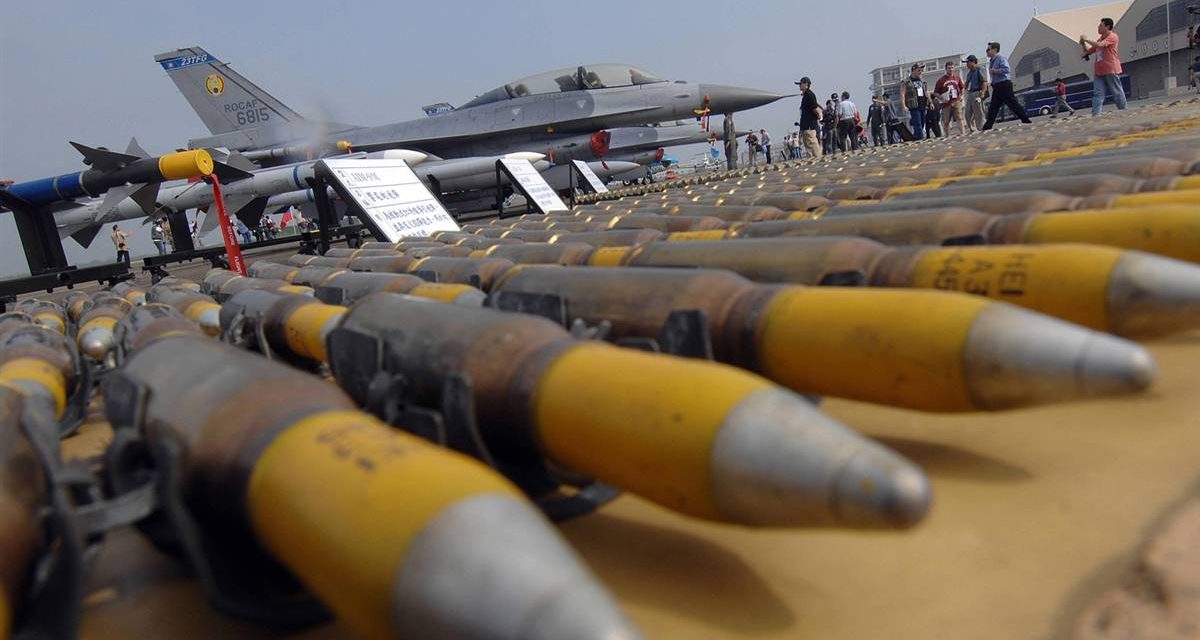
While relations between the two countries have been stable for the past two years, the build-up of both militaries has had the destabilizing effect that Pollins referenced. The U.S. gave Pakistan about $11 billon in military aid between 2002 and 2009. Pakistan recently received a U.S. shipment of new F-16 fighter jets and had previously purchased F-15 jets. The country has been given this military assistance to fight extremism on the Afghan/Pakistan border region but has been accused of using these funds to bolster defenses against India instead. Pakistan believes the military buildup of India “will have severe consequences for peace and security in South Asia”. Thus Pakistan has been unable to focus all of its resources on reducing the risk of violent extremism within their borders. Instead, a large portion of its military might has gone into patrolling the India-Pakistan border and not Af-Pak. Zia Mian, a physicist at Princeton and columnist for Foreign Policy in Focus says that the arming of Pakistan has hurt the U.S. war in Afghanistan. Pakistani generals are more concerned with the U.S.-India strategic relationship and its border with India than with the Taliban.
The destabilizing effect of weapons transfers can also be seen within the relationships between the United States and China. China also has a disputed border with India that has caused friction between the neighbors. An August 18 report in the Times of India said that Beijing is concerned with “the strategic ramifications of India’s rising power.” As a response to this ascension, China is moving CCS-5 nuclear capable ballistic missiles closer to the Indian border.
The notion that the U.S. is moving into India to balance the power of China is also aggravating tensions between China and India. Colin Geraghty, columnist for Foreign Policy in Focus, says that the U.S. strategy must be more focused than it is right now to clearly indicate to Chinese officials that the U.S. policy towards India is not intended to confine China.
India’s growing defense budget has also come at the expense of other national needs. In his paper The Growing Military Industrial Complex in Asia, John Feffer of Foreign Policy in Focus writes that countries have “devised a wealth of rationales for military spending—and each has ignored significant domestic needs in the process” and have “ignored significant domestic needs in the process.” While the Feffer article refers to arms buildups surrounding the Korean peninsula, these same sentiments can be said for India. While India’s army grows, 40% of its citizens live below the World Bank’s poverty line of $1.25 per day. That $30 billion a year spent on its military could greatly help the plight of the poor.
The weaponization of India also undermines the ability of the U.S. to use soft power to stop human rights abuses. India has many human rights violations according to Amnesty International. Some of the worst include unlawful killings, excessive use of police force and torture. Even with these violations, the U.S. has continued arming India and the U.S. only recently committed to exploring the idea of an arms trade treaty. Meanwhile, the U.S. is urging China to end human rights abuses and has pushed for the release of the 2010 Nobel Peace Prize laureate, and jailed pro-democracy journalist, Liu Xiaobo. The United States loses significant credibility in urging China to end its human rights abuses while it simultaneously arms and overlooks the human rights abuses of India.
While there are a wide range of global structures meant to prevent the spread of nuclear weapons like the Nuclear Supplier Group and the Non-Proliferation Treaty, there is no equivalent for conventional arms transfers. The UN has made attempts since 1993 to develop an arms control treaty that would limit sales to human rights violators and undemocratic nations. In 2008, the UN voted to create a framework for arms control. After initial opposition during President George W. Bush’s administration, President Obama now supports regulation of conventional weapons. Regardless of trade restrictions, limiting trade by any country will continue to be a challenge due to limits of enforcement mechanisms in global governance.
